March 3, 2026
There also needs to be oversight into the full completion of defences. In Valencia, the river was re-routed following the catastrophic floods of 1957, but this left towns outside of the city centre exposed. Defences meant to protect those communities were never completed. When flooding returned in 2024, residents hurled mud at the Prime Minister, telling him "You have abandoned us."
The flood mapping and imaging required to mitigate these issues already exists. But what if threats could be identified and addressed before they escalate into major events?
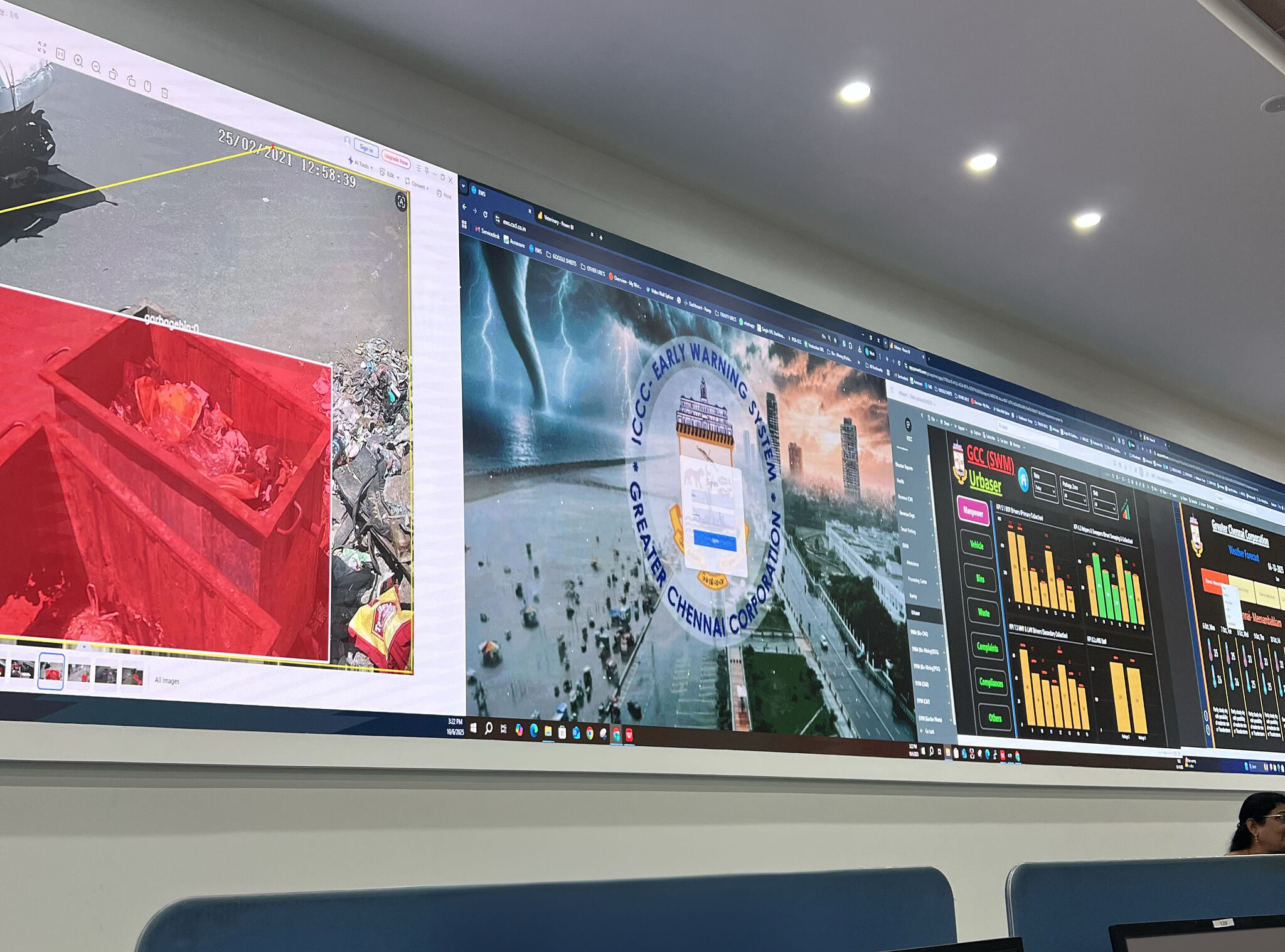
In Chennai, the Command and Control Centre represents one of the most developed examples of a Smart City approach to flood resilience. The Centre enables greater connectivity between all aspects of urban infrastructure: waste, energy, transportation, and flood mapping. Rather than relying on a reactionary response to flooding, the system tracks conditions in real time. Decision makers can monitor rising water levels and rainfall concentrations as they happen.
This is made possible by the Internet of Things, which converts passive infrastructure into active, responsive systems. Data is continuously transmitted to the Command Centre, triggering alerts when critical thresholds are breached.
The capability for this technology already exists in many major cities. Select boroughs in London are currently being used as testing grounds. Chennai demonstrates what a proactive model of flood resilience and response looks like in practice. This is my photo made possible by a visit kindly organised by Innovate UK.
Cities that learn from memory will invest in the data systems that build their resilience.
Cities that don't will continue rebuilding after the same disaster, again and again.
February 18, 2026
February 4, 2026
January 22, 2026
January 15, 2026

December 18, 2025
December 11, 2025