Get in touch→
Cover of Cities and Flooding: a woman wades through floodwater in a city street, holding a bag above the water.

Case Study: Cities and Flooding

'Helping decision makers reduce flood risk and manage the impacts of climate change, through positive and responsible measures, without entirely discouraging development.'

A global handbook for the World Bank

BACA Architects, in collaboration with GHK and the University of Wolverhampton, were commissioned by the World Bank to produce a Global Handbook on Integrated Urban Flood Risk Management.

An operational guide

The handbook is an operational guide for decision makers and technical specialists, specifically in the metropolitan areas, cities and towns of developing countries. It enables them to take effective steps to manage the risks of urban flooding in their areas as these settlements undergo urbanisation and grapple with the impacts of climate change.

Measures from around the world

The handbook provides illustrations of a range of measures that have been developed around the world, from conventional techniques to innovative physical and digital technology.

Managing risk without stopping development

The handbook also aims to help decision makers reduce flood risk and manage the impacts of climate change, through positive and responsible measures, without entirely discouraging development.

Options at every scale

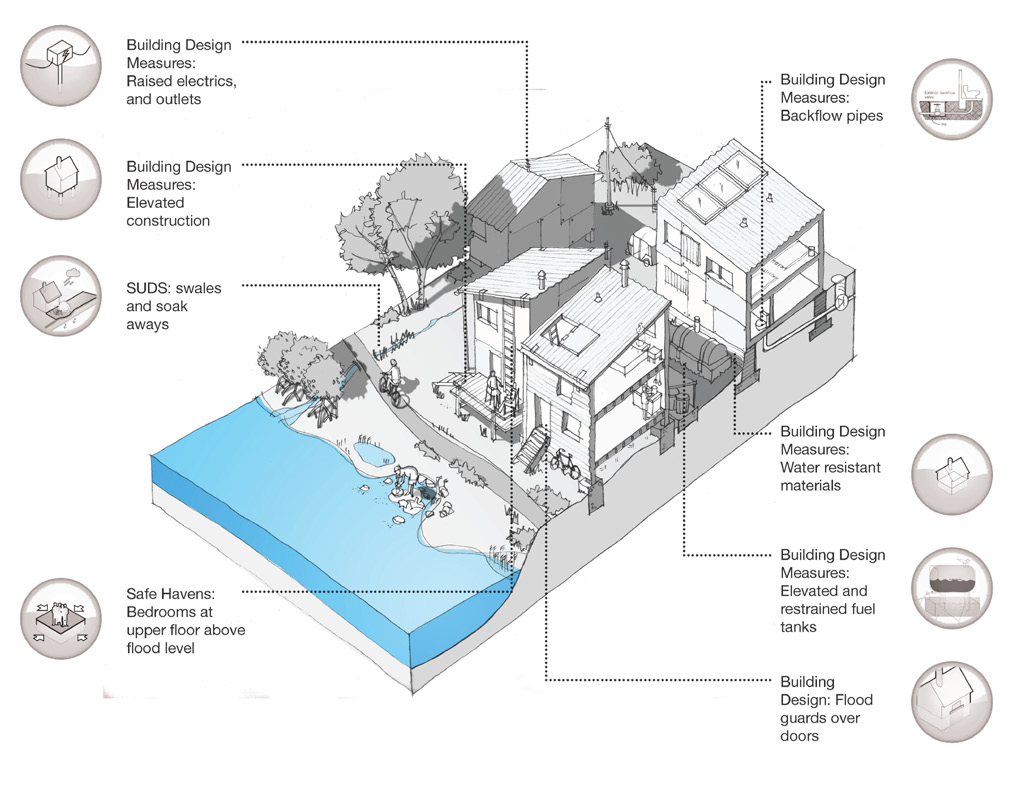
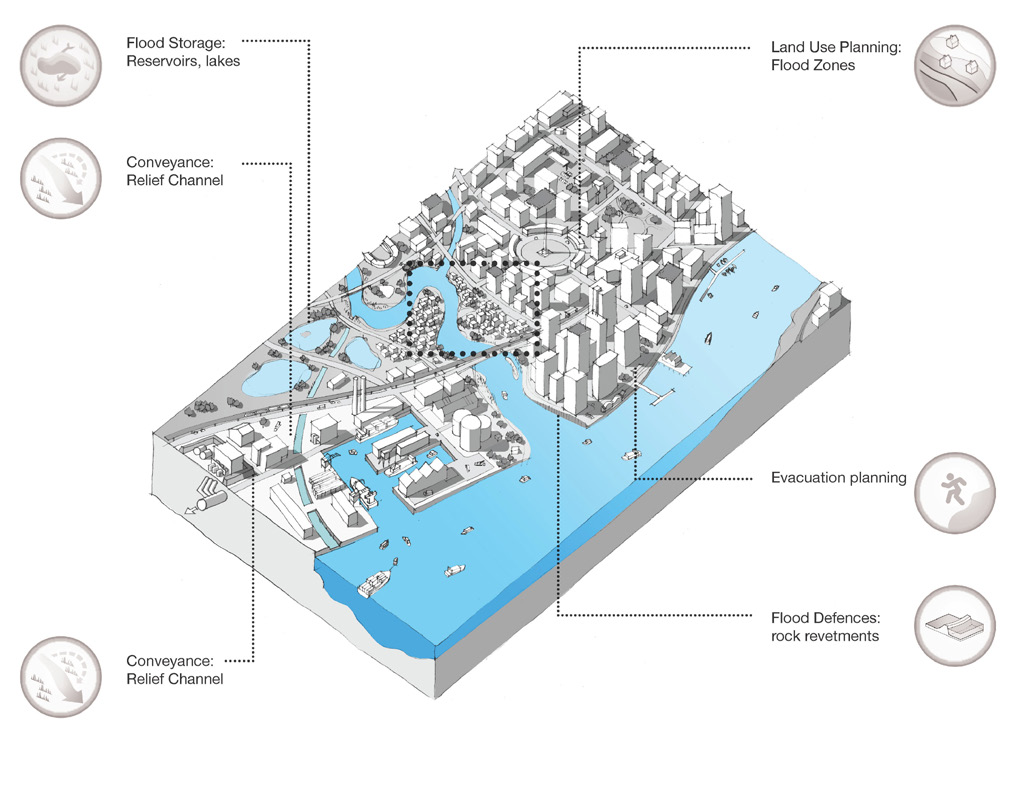
BACA's illustrations set out flood risk measures at four scales: regional, city, neighbourhood and building.
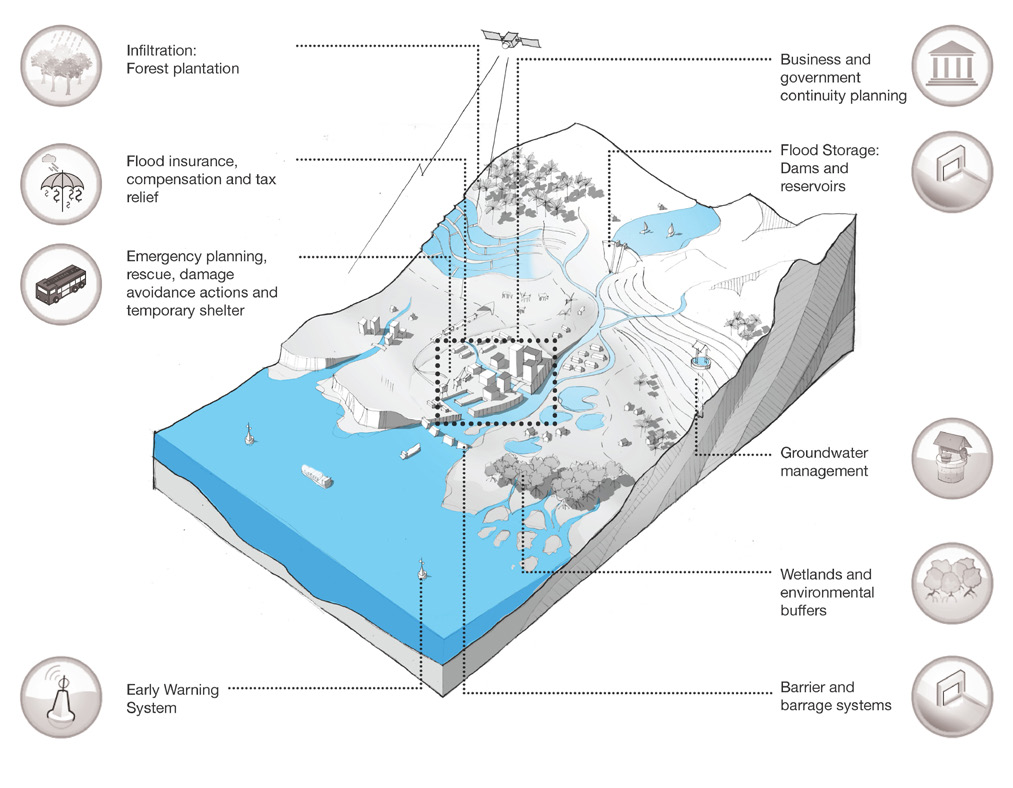
Regional options: a river catchment with forest planting, dams and reservoirs, wetlands, barriers and early warning systems.
Regional options
City options: flood storage reservoirs, relief channels, flood zone planning, evacuation routes and rock revetments.
City options
Neighbourhood options: green roofs and swales, underground storage, safe havens, earth banks and wetland buffers.
Neighbourhood options
Building options: elevated construction, raised electrics, backflow pipes, water-resistant materials and flood guards.
Building options

View the full PDF here:

Download
← Back to research