
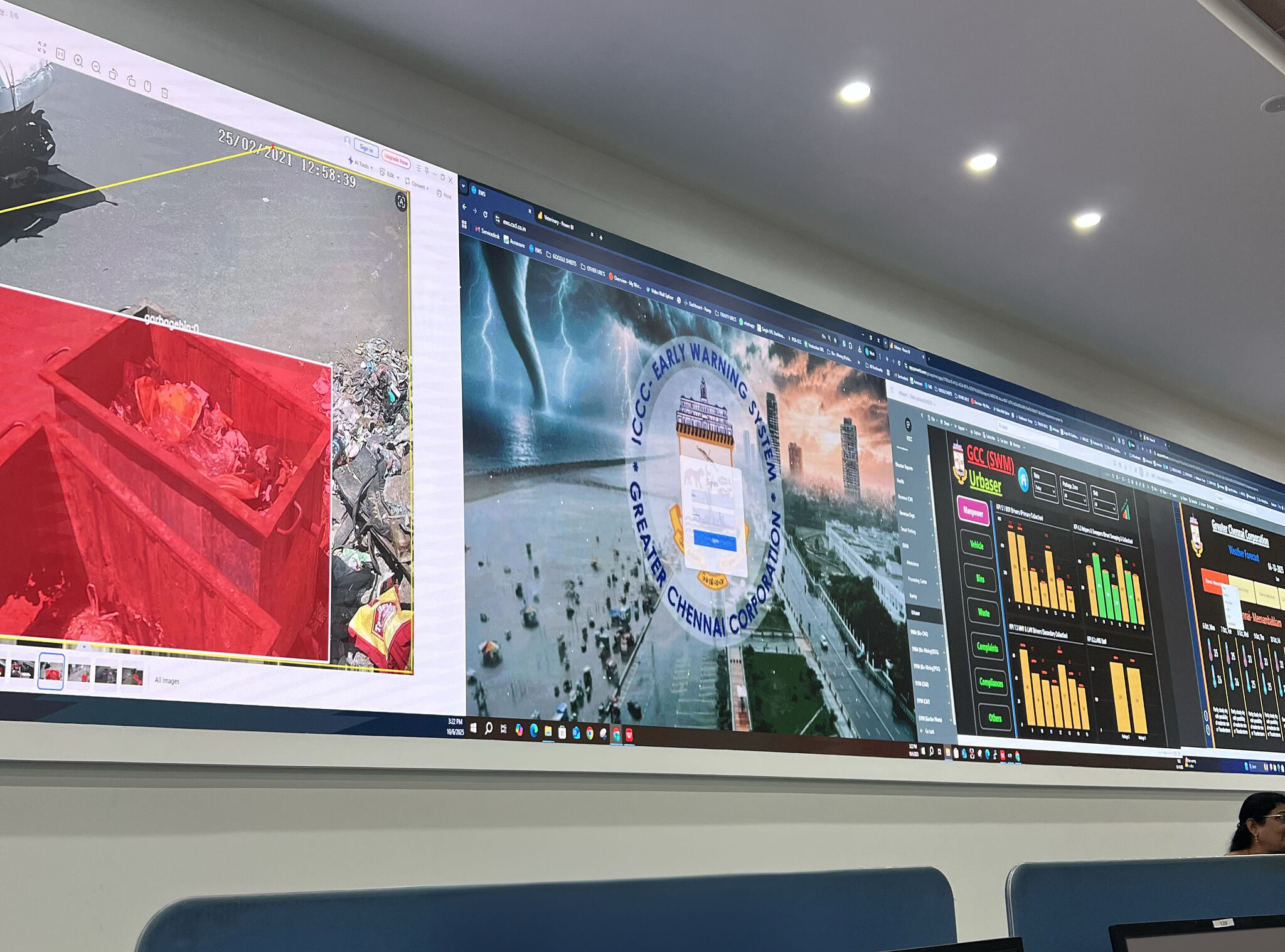
Foresight and memory are two of the core components of flood resilience. If we do not learn from the mistakes and errors of past disasters, we will repeat them.

For the people who run the country and the people who keep the country running.
Chaired by the former Home Secretary and Education Secretary, Lord Blunkett, The Leaders Council of Great Britain and Northern Ireland brings together the most influential figures from across the country. It celebrates the hard work and achievements of the nation’s unsung leaders while laying the groundwork for the next generation.
From the CEO of a multinational bank to the founder of an innovative new start-up, these are the people who take risks, create jobs, and empower their colleagues.
As Leaders Council members, they are committed to sharing knowledge with others.
BACA Director Richard Coutts expresses his gratitude to Lord Blunkett and his team for inviting him to join the Leaders Council at Westminster last week. King Charles III’s Coronation carriage welcomed guests at Parliament.
“It was humbling to join NHS leaders, headteachers, sports club leaders, and innovators in tech and building materials. I particularly enjoyed meeting up with the team from BioHouse – although they made me feel quite old! Also, thanks to our long-term client, Mr. Joshua Church of Blythe Holdings, who joined us from the Isle of Man for the evening.” said Richard.
Hopefully, these new connections will help with our lobbying for modest changes to the building regulations to enable resilient measures linked to flood zoning to come forward.
For the people who run the country and the people who keep the country running.
Read More
According to Flood Re, a partnership between the insurance industry and the UK Government, there are 2 million people across the UK exposed to 'frequent flooding.' They have a greater than 10% chance of being flooded in the next decade. Climate change and increased flooding are sadly two sides of the same coin.
When our practice first started research in the flood sector, the average cost of repairing a flooded home was £22k. This has now risen to £32k. Some good news: 266,000 Flood Re policies were taken up in 2022. If flooded, Flood Re will provide up to £10K in addition to the repair costs to 'Build-back-better,' making homes more secure and more flood-resilient to what will inevitably come.
BACA Director Richard Coutts was invited to the Launch of Flood Re's Transition Plan 2023 at the top of the Gherkin last week. Not only for the event but also as an architect, level 40 (building by Fosters & Partners) provides some of the best views of the City of London. It also affords a wonderful view of Lloyds of London by Richard Rogers.
Laura Tobin, Meteorologist, and Weather Presenter provided a great introduction to the event and some sobering statistics on climate change. She rallied the audience to keep the global temperature within 1.5 degrees Celsius. At 1.5°C, summer maximum rainfall could increase by 4%. At 3°C, summer maximum rainfall could increase by 7%. Interspersed with dryer spells, the consequences of surface water runoff will be significant.
For those considering buying a house soon, please enter your postcode into the EA’s searches. It will give you an instant indication of the risk from both river and surface water flooding. Avoidance is key.
If you can't avoid it, then utilize the government’s flood insurance.
According to Flood Re, a partnership between the insurance industry and the UK Government, there are 2 million people across the UK exposed to 'frequent flooding.'
Read More
BACA are bringing a new golfing and entertainment experience to the UK. Green Golf combines pro golf with a gaming experience that can enliven any existing golf range or create a destination experience that appeals to a broad demographic.
Located near Farnborough, it will offer a unique and interactive golfing experience for players of all skill levels. Instead of traditional golf courses, Green Golf features a multi-level driving range with various targets and electronic tracking systems.
Here's a description of what you might expect to find at a typical Topgolf facility:
1. Driving Range: The heart of Green Golf is its driving range, which consists of multiple hitting bays spread across several levels. Each bay is equipped with a high-tech setup, including microchipped golf balls and radar-based tracking technology. Players hit the balls into the range, aiming for different targets at various distances.
2. Scoring System: The microchipped golf balls allow for accurate scoring. When a player hits a ball, it is tracked and scored based on the distance and accuracy of the shot. The targets on the range are color-coded, and players earn points based on where their ball lands. The scores are displayed on screens in each bay, creating a competitive and engaging environment.
3. Climate-Controlled Bays: Green Golf offers climate-controlled hitting bays, allowing visitors to play comfortably regardless of the weather conditions outside. Each bay is typically furnished with seating, tables, and a dedicated server to cater to guests' needs.
4. Food and Drinks: Green Golf provides a full-service restaurant and bar, offering a menu with a variety of food and beverage options. You can enjoy a meal, snacks, or drinks while playing or watching others. Servers are readily available to take orders and deliver food and drinks to your bay.
5. Games and Challenges: In addition to the standard driving range experience, Green Golf offers various games and challenges that can be played using the scoring system. These games add an extra layer of fun and competition among players, allowing them to compete against each other or form teams.
6. Events and Socializing: Green Golf will be a popular venue for social gatherings, corporate events, and parties. It provides a lively and energetic atmosphere where people can socialize, enjoy the game, and have a great time with friends, family, or colleagues.
Overall, Green Golf offers a modern, technology-driven approach to golf that combines entertainment, food, drinks, and a social atmosphere. It has gained popularity worldwide as a recreational destination for golf enthusiasts and casual players alike.
Plans will be submitted to the LPA in Q4 2023.
Many thanks to @robsaunders for all your guidance.
BACA are bringing a new golfing and entertainment experience to the UK.
Read More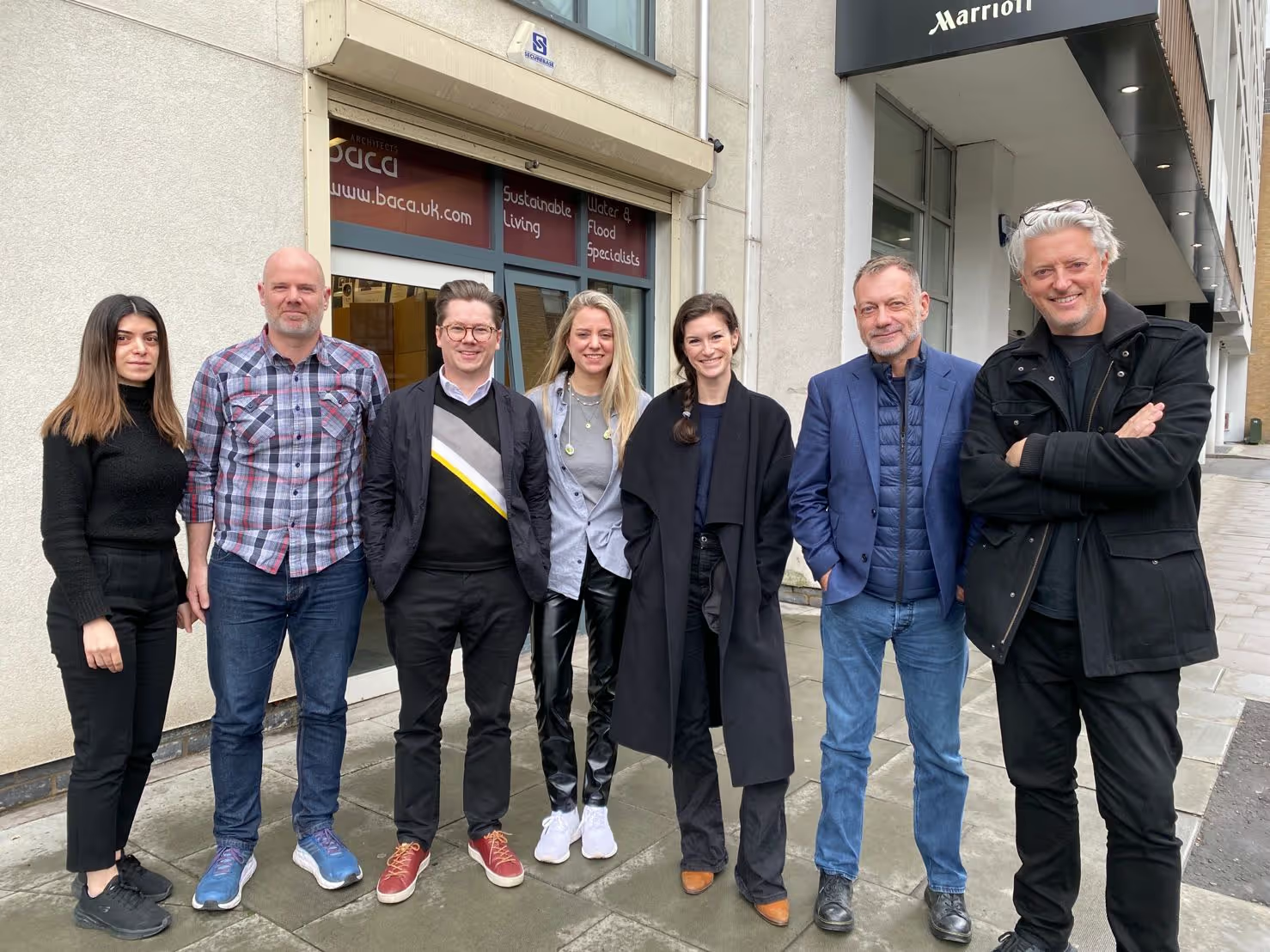
In an exciting turn of events, the team at BACA architects welcomed Wells International to London for an intensive design workshop. The collaboration was nothing short of extraordinary as both teams delved into cutting-edge design work with a focus on international competitions.
The workshop explored diverse themes, from giga-development to ultra-luxury, showcasing the versatility and depth of the collaboration. With a shared vision for the ambitious Saudi Vision 2030, we are poised to shape the future of international design.
A special thank you to Wells International for making the journey to London and contributing to this exciting chapter of collaboration. Stay tuned for more updates as Wells International and BACA architects continue to push the boundaries of design innovation together!
In an exciting turn of events, the team at BACA architects welcomed Wells International to London for an intensive design workshop.
Read More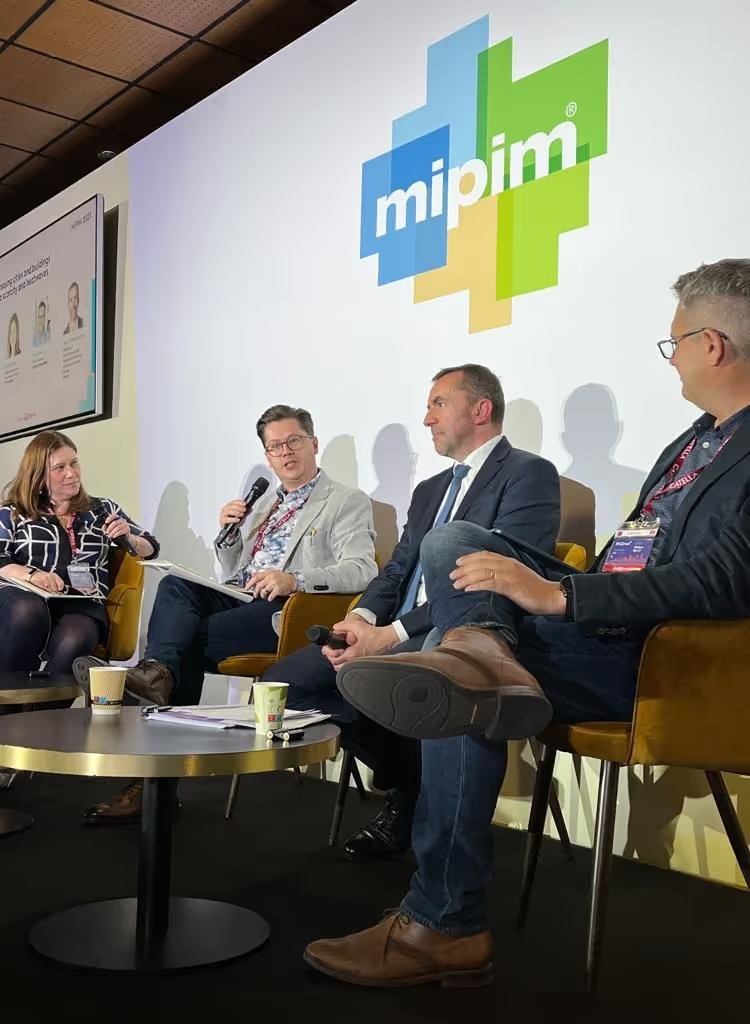
Our CEO, Richard Coutts, is participating in MIPIMWorld, the largest annual global property event. He will be part of a panel discussing the crucial issue of water in the context of property development.
Panelists:
Jean-Christophe Taret
Alexandra Notay
Richard Coutts
Harold Spies
Currently, 30 cities in France are facing water shortages even before winter ends, and special measures for water usage will be announced soon. Water sobriety is now the new buzzword in Europe as the continent copes with the effects of extreme weather conditions. Stay tuned for more updates as there are insightful solutions in South Africa.
Our CEO, Richard Coutts, is participating in MIPIMWorld, the largest annual global property event.
Read More
BACA Directors Richard Coutts and Robert Pattison have launched a spin-off hospitality and leisure company called 'Outdoor Sanctuaries.'
It’s a fun project that has emerged from our practice during lockdown.
We had been working on lots of lakes and ex-gravel pits to regenerate them for the emerging staycationer market. Many of these sites were bounded by trees, but we couldn’t find low-impact treehouses – so we decided to design, build, and sell our own.
The single pod is shown. The pods have a pentagonal plan and tessellate in 2 and 3-pod configurations.
The prototype is currently under construction, and we’ll share images soon.
If you have a site, then these can be brought off the shelf, so do request a brochure, and we can send you the specifications and price list.
BACA Directors Richard Coutts and Robert Pattison have launched a spin-off hospitality and leisure company called 'Outdoor Sanctuaries.'
Read More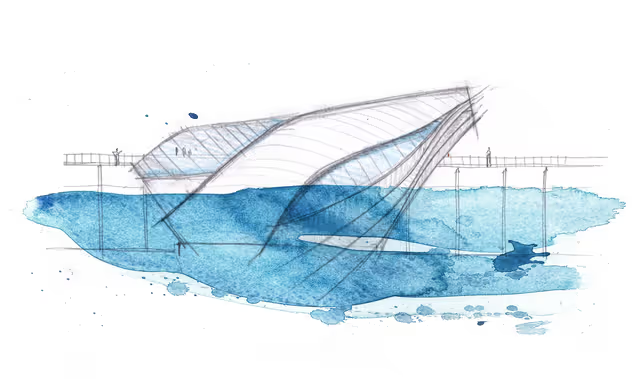
Bringing together a decade of hand drawings by BACA Directors Richard Coutts and Robert Pattison.
“It’s been almost 20 years since we both collaborated as master’s students to design the ‘Studium’ at university, an ambitious proposal for a mini-campus combining Architectural School, Planning, Landscape, and Geography Departments. It was the connecting spaces in-between: the communal staircase, lobby, and refectory spaces that encouraged social interaction. Who would have thought nearly 20 years later that we would still be collaborating and developing some of the most ambitious buildings in the world that are in, on, near, and under water!” says BACA's Creative Director Robert Pattison.
Hand drawing has played an integral part in BACA’s design process. It captures the genesis and energy of the concept—a simple stroke of the pencil capturing the movement of the roofline or the flow of water through a master plan. Richard recalls sketching the ‘Whale’ during a 7am call with the Australian counterparts during lockdown. The tender winning designing of a ‘rock’ was quickly dismissed by the mayor who wanted a pirate ship, complete with mast and flag. A cup of coffee was needed, then a quick sketch, a photo on an iPhone, a WhatsApp message and then on a screen via Matt at Subcon. They loved it and the designs went out in the press that Christmas. If they built it, then it’s a great origin story.
Do enjoy the sketchbook as much as we enjoyed creating the images!
Bringing together a decade of hand drawings by BACA Directors Richard Coutts and Robert Pattison.
Read More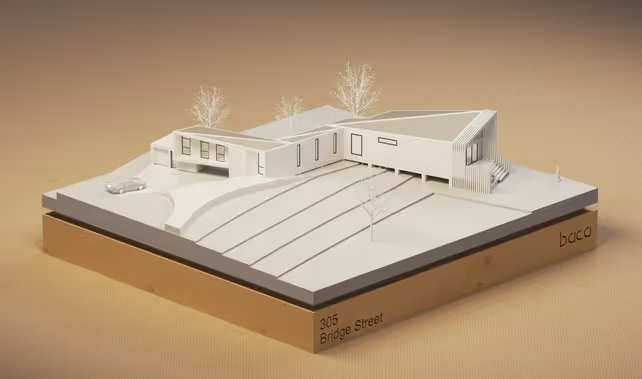
After the long lag caused by the COVID pandemic, we are pleased to report a wave on new flood resilient homes will start in site this year that will test new technologies and with innovation at the threshold of current policy parameters.
Weave House has secured full planning permission in Chelmsford. A suburban infill site next to a river the site has provided both a challenge in terms of tackling traditional infill policy with the complexity of flooding.
The 285m² (3000sq ft) 'part flood-resilient, part-elevated' Weave House will replace an existing, rundown house and outbuildings. The project, which is expected to cost around £900,000, features two blocks connected by a ramped spine. The landscaping will re-wild several areas of the garden by removing much of the existing hard standing.
Featured on AJ: https://www.architectsjournal.co.uk/news/baca-wins-approval-for-flood-resilient-house-in-chelmsford
New Flood Resilient Homes.
Read More
“This book caught my eye in my local bookshop. First, the cover, and then the title! Picture attached with one of my sketches” says BACA Director, Richard Coutts.
Needless to say, the topic resonates, and for those who work in the water sector, urban design, or resilience planning, this will make a very enjoyable Christmas purchase.
From the back cover: Giulio Boccaletti - Honorary research associate at the Smith School of Enterprise and the Environment, Oxford University - shrewdly combines environmental and social history, beginning with the early civilizations of sedentary farmers on the banks of the Nile, the Tigris, and Euphrates Rivers. He describes how these societies, made possible by sea level changes from the last glacial melt, incisively examining how this type of performance led to irrigation and multiple cropping, which, in turn, led to population explosion and labor specialization.
We see with clarity how irrigation’s structure informed social structure (Inventions such as the calendar sprang from agricultural necessity); how in ancient Greece, the communal ownership of wells laid the grounds for democracy; Greek and Roman experiences with water security resulted in systems of taxation; and how the modern world as we know it began with the legal framework for the development of water infrastructure. 'Water: A Biography' richly enlarges our understanding of our relationship to - and fundamental reliance on - the most essential substance on Earth.’
This book caught Richard's eye in his local bookshop. First, the cover, and then the title!
Read More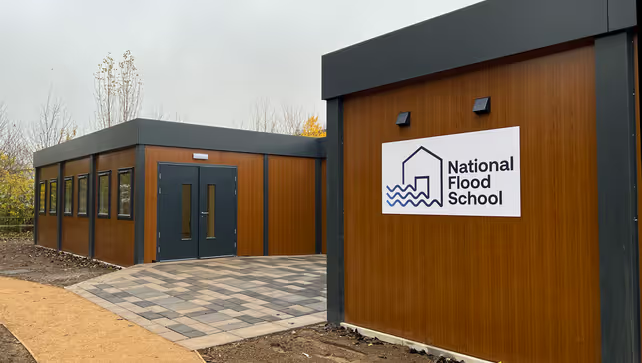
Last week, BACA Director Richard Coutts visited the 'Flood school' at HR Wallingford’s flood testing site near Oxfordshire to attend Flood Re’s 'Property Resilience Roundtable.' Flood Re is a reinsurance scheme that makes flood cover more widely available and affordable to homeowners.
The topics covered included an update on the PFR Community of Interest, the Flood Compliance Platform, a detailed update on and practical exercise on Build Back Better, an update on the Scoring Project, and updates from Defra and the Environment Agency on policy and implementation.
Moving forward
It is our observation that homeowners will not wade through 500-page manuals and, often and reluctantly, will only engage with the statutory requirements of the building regulations. Recent conversations with clients have included challenging discussions over their requirement to have larger areas of glazing and questioning why we need to deliver 10% net biological gain. Another observation is the growing trend to pave over front gardens to enable electric cars to charge next to the home – the owners feel they’ve done their bit for the environment when, conversely, they are removing landscaping that attenuates and reduces surface water flooding. The rising cost of fuel prices has also added to the mix, and hence it is in this context that the Flood Re Insurance Coverage and proposed version of the EPC Certificate should be considered.
The data sets are encouraging, but what is clear is how best now to translate complex data (and, as we know, every flood site is different) into some simple, comprehensive guidance that empowers householders to improve their stock either proactively or after a flood event has occurred to boost their future resilience.
Our suggestions:
The assessment should also include what percentage of the property's external spaces are hard or soft (therefore addressing issues such as paving over gardens for electric cars and considering permeable paving as an alternative) and therefore not exacerbating surface water flooding.
Last week, BACA Director Richard Coutts visited the 'Flood school' at HR Wallingford’s flood testing site near Oxfordshire to attend Flood Re’s 'Property Resilience Roundtable.'
Read More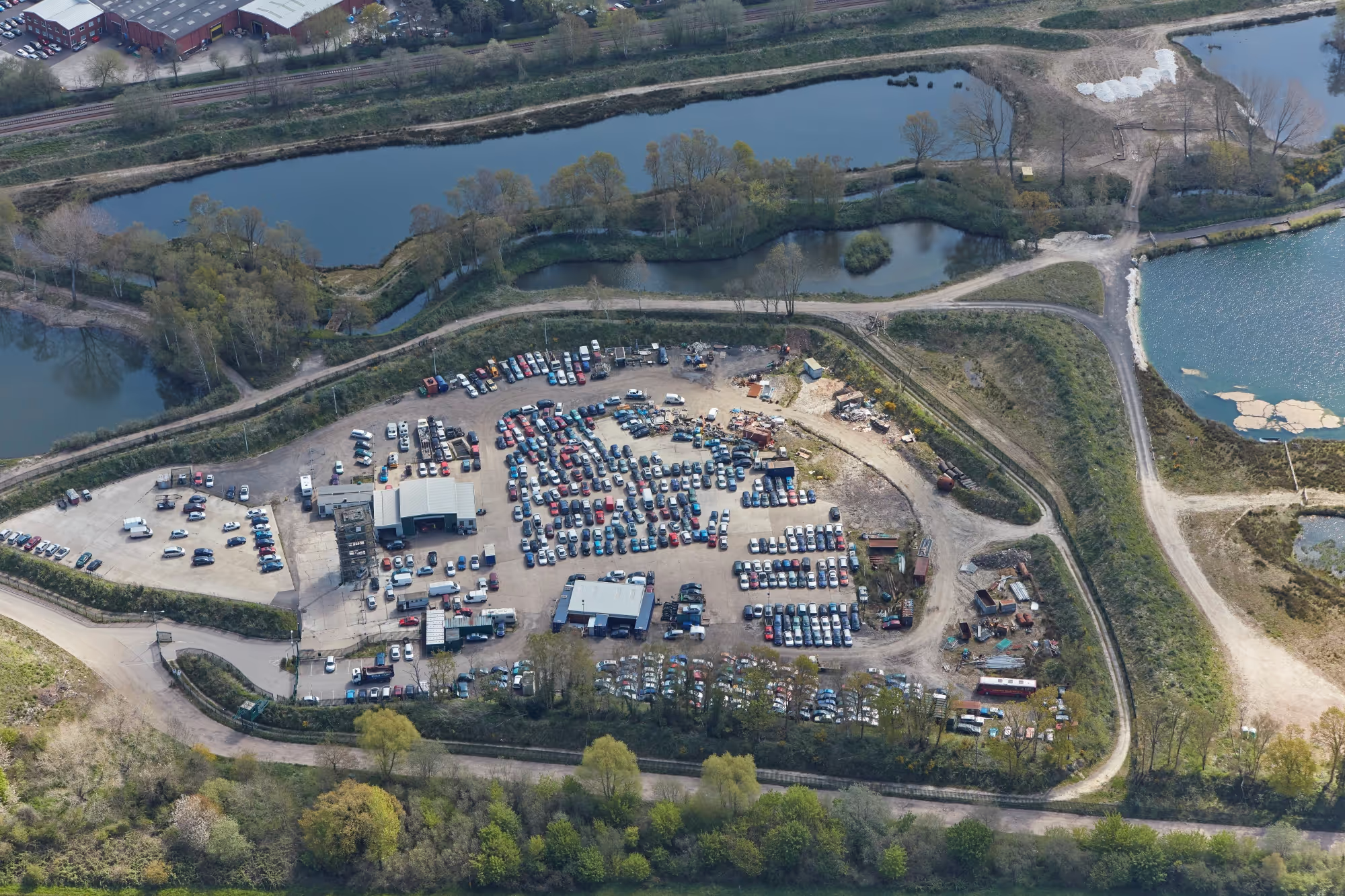
12% Net Ecological Gain for Former Mineral Extraction Site and Car Breakers Yard.
BACA architects have secured full planning permission for an ambitious aqua sports leisure park, hospitality venue, and visitor attraction in the Blackwater Valley near Farnborough, UK.
The proposals include:
The site is currently closed to the public. The 16-hectare site, of which 9 hectares are water, is in flood zones 2 and 3, was a former mineral extraction site and car breakers yard. Proposals have been developed in close consultation with both Rushmoor and Hampshire County Council, Heads of Economy and Strategic Regeneration, and the Planning Team.
Despite a challenging set of constraints, the scheme went through unanimously at Committee.
The proposals will promote healthy lifestyles and encourage physical activity, indoor and in-built sports and recreational facilities.
Working with Aspect Ecology, the proposals offer the opportunity for the existing lakes and surrounding habitats to be brought into favorable conservation management in the long term. The proposals will deliver an ecological net gain of 12.45% (Habitats) and 277% (Linear Features). New diverse wetland margins and reed beds will be introduced at three locations within the lakes, and the whole of the smaller central lake will be restored to create a pond and wetland area.
Team
Client: Drayparks
Planning Consultant: Bell Cornwell
Architect: BACA architects
Landscape & Ecology: Aspect
Flooding: Tetratech
Highways & Transport Plan: Waterman Group
BREEAM: Scott White and Hookins
Leisure Needs Assessment: Avison Young
Ground Contamination: Waterman Group
Floating Homes: Floating Homes Limited
12% Net Ecological Gain for Former Mineral Extraction Site and Car Breakers Yard.
Read More
“One Planet Living was a concept developed by Bio-Regional when I was a student. It spurred BedZED, by Bill Dunster - the UK's first major sustainable community. It’s a philosophy that has slowly gained traction. At BACA, we developed LifE (Long-term Initiatives for Flood Risk Environments), a body of work that would enable sustainable development and, in Monaco’s case, address sea level rise.” Says Richard Coutts, Director at BACA Architects.
So, when invited to speak at the Royal Yacht Club Monaco, organized by Monaco Marina Management, he posed a simple question to the audience and the club - Could the municipality of Monaco (Population 39,000), including the yacht club (a hub of marine innovation), become a self-sustaining community? Observing the marina, you get a glimpse of the built future: thin film photovoltaics wrap state-of-the-art monocoque catamarans – that use wind as their main source to carry them on hydrofoils across the Atlantic. Among other exhibitors, plans for hydrogen-powered tenders and ecoconcrete sea defenses (reduced carbon in production, designed for carbon capture, biophilic receptiveness).
But like most countries and cities - one overriding issue: Monaco has no more space. Its positives include that because of its size, it can change policies quickly and has the financial means to enact change.
Within the marina, luxury boats sit primed at 100% charge, but they do not work together, dumping waste energy. To an observer, possibly one of the most beautiful solar arrays on water. Could this flotilla of boats create a unified energy network and either capture surplus energy or use it for the benefit of the wider city?
Monaco is also very urban, consisting of many hard surfaces - its roofscapes are prominently flat with little greening. So, there was a discussion alongside pioneers of energy, design, and materials, what is the future of the Smart Marina and could this be extended into smart city design that they sustain.
The symposium was hosted by Sir Robin Knox and was great to share ideas with Maarten van de Vorde - West 8, And Nicola Beck - NBax Architecture & Design, Eduardo Gutierrez - On-A, Giovanni de Niederhausern – Pininfarina.
Hopefully, these ideas will evolve into tangible deliverables.
BACA have been invited to speak at the Royal Yacht Club in Monaco.
Read More
The Avocett III will be the latest vessel to join BACA’s flotilla of floating homes/aquatecture. Located on the Isle of Wight, the floating home builds on the Chichester design (2008) and now features 2 bedrooms plus a sleeping gallery. The sawtooth profile roof is designed to receive solar panels and is supported by a high thermal performance envelope. More images will follow shortly.
Due to its remote location, the base cannot be cast in one pour, unlike the Chichester. Therefore, the whole project and modular sizes are dictated by restricted access and what a small team of contractors can assemble by hand. Much of the build will take place on top of the floating platform once that element is built.
Construction drawings are underway, and the build will start in spring 2023.
The Avocett III will be the latest vessel to join BACA’s flotilla of floating homes/aquatecture.
Read More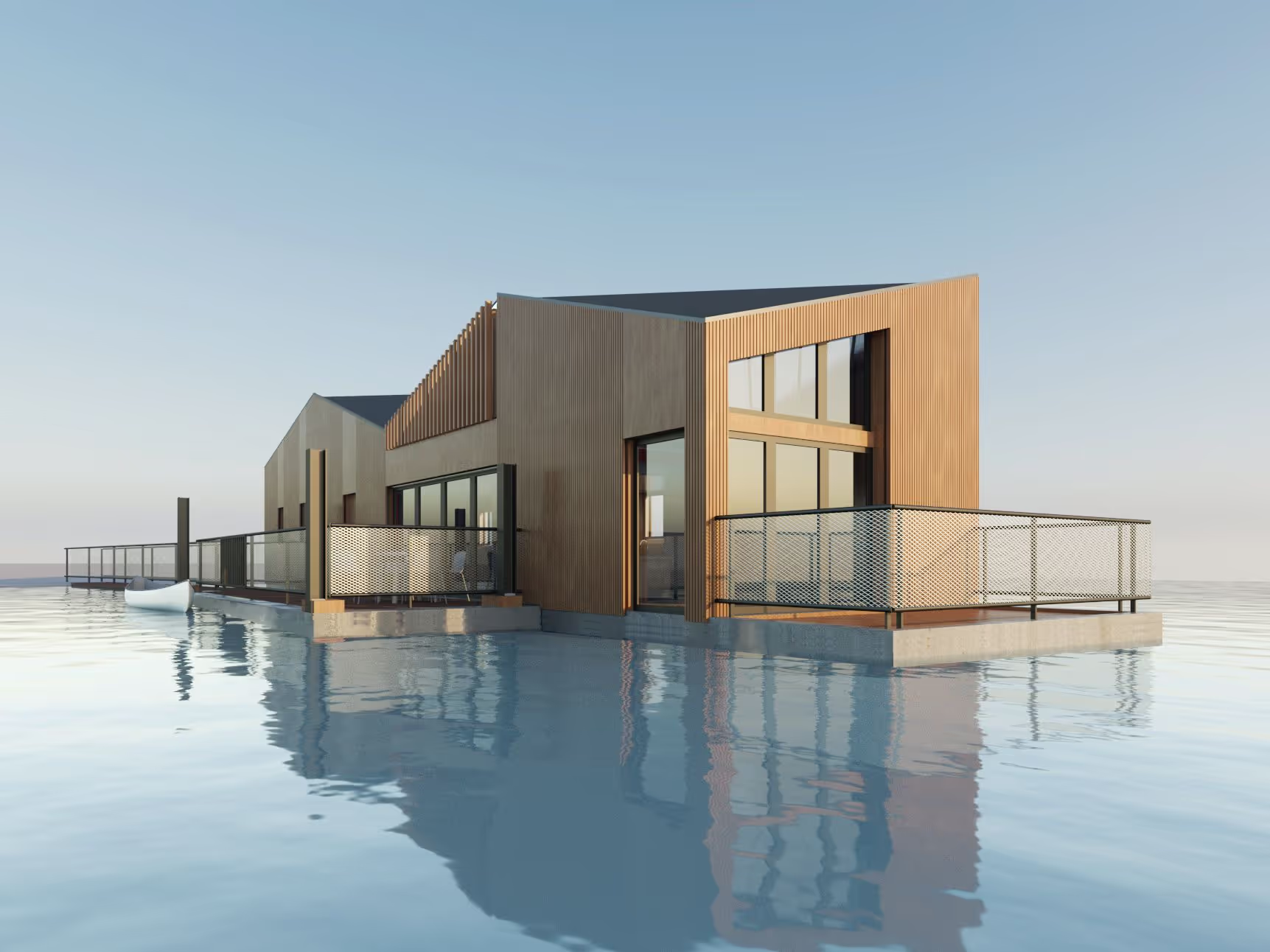
The Avocet III will be the latest vessel to join BACA’s flotilla of floating homes/aquatecture. Located on the Isle of Wight, the floating home builds on the Chichester design (2008) and now features 2 bedrooms plus a sleeping gallery. The sawtooth profile roof is designed to receive solar panels and is supported by a high thermal performance envelope. More images will follow shortly.
Due to its remote location, the base cannot be cast in one pour, unlike the Chichester. Therefore, the whole project and modular sizes are dictated by restricted access and what a small team of contractors can assemble by hand. Much of the build will take place on top of the floating platform once that element is built.
Construction drawings are underway, and the build will start in spring 2023.
The Avocet III will be the latest vessel to join BACA’s flotilla of floating homes/aquatecture.
Read More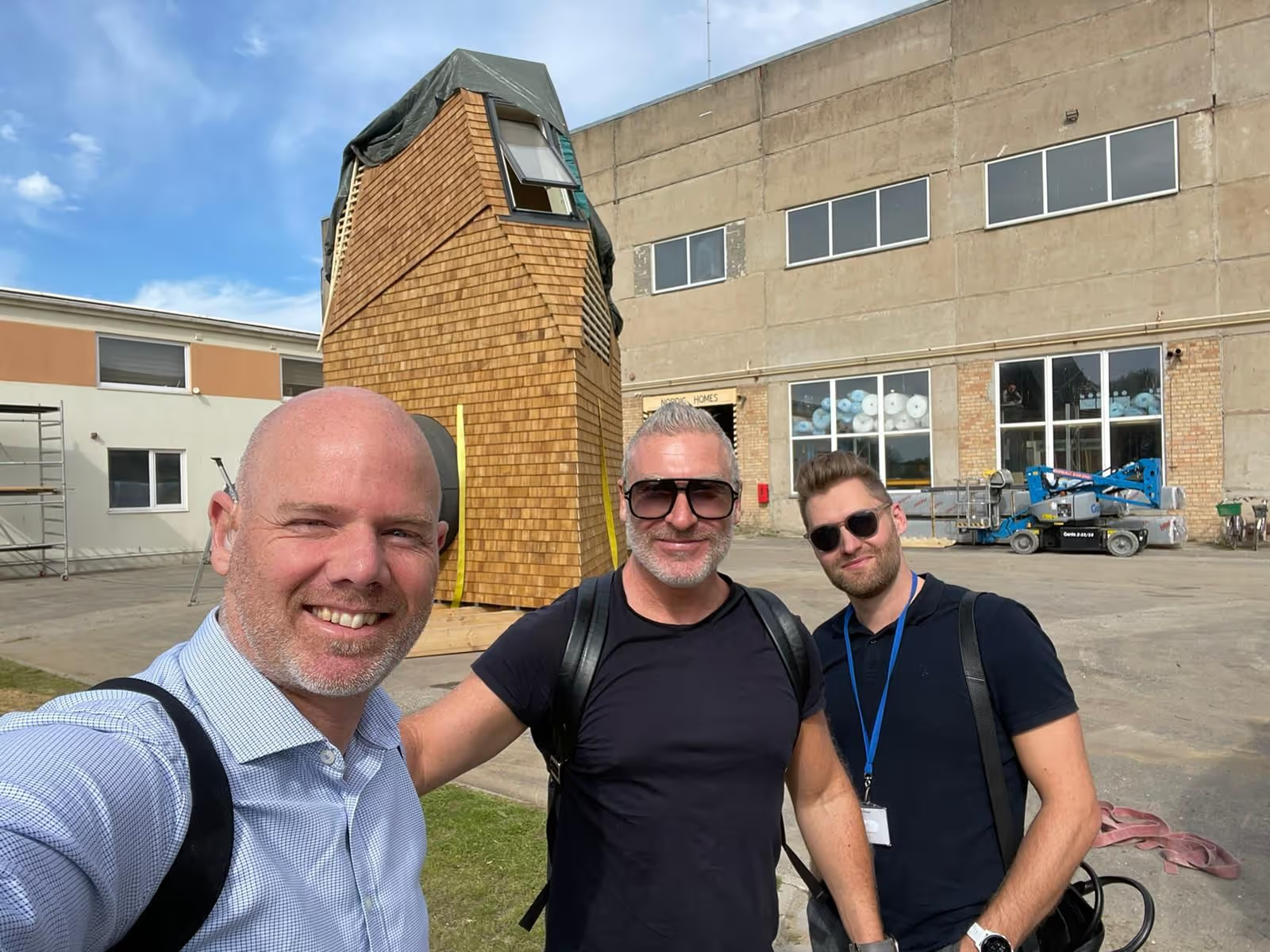
Site visit to our first 'Outdoor Sanctuary' prototype.
BACA’s Creative Director Robert Pattison visited the prefabricated prototype for the Skylark under construction. Pre-fabricated in the factory, it was wonderful to see the scale of the demo come together. Once the pipeline is up and running we should be able to build 10 every 2 weeks.
We’re excited to release some ongoing construction images of our staycation pod prototype. These pods provide elegant and contemporary holiday accommodations nestled into woodlands and other natural settings.
Thank you to David McCann owner of Landall Barnsoul in Scotland for visiting and Kapsers of Nordic Homes for your wonderful hospitality.
Site visit to our first 'Outdoor Sanctuary' prototype.
Read More
The Busselton Jetty Village and Marine Discovery Centre, 'The Village,' will be ready in July 2023!
Phase 1 will be built 1.7 km out to sea at the end of the iconic Busselton Jetty. The Village will transform the visitor experience,offering something for everyone, including customers visiting the longesttimber-piled Jetty in the southern hemisphere, respite areas for our over 100 volunteers, locally sourced, world-class food and beverages to quench your hunger and thirst after the long journey out, as well as a marine discovery centre where you’ll be educated on the wonders of the sea below the Jetty and beyond.
If you’re a diver or snorkeler, there will also be a new underwater artificial reef trail that will include unique sculptures andstatues, allowing you to see the Jetty from a totally different perspective!
The project has $22m of grant funding from:
A project like this doesn’t happen without a lot of hardwork. Thank you to the BJI Board of Management, BJI staff, Volunteers, and Project Superintendent for their tireless efforts.
Marine Contracting by Subcon.
Designed by BACA with Perth Architects, Gresley Abas Architects.
Marine Engineering by Core Marine.
The Busselton Jetty Village and Marine Discovery Centre, 'The Village,' will be ready in July 2023!
Read More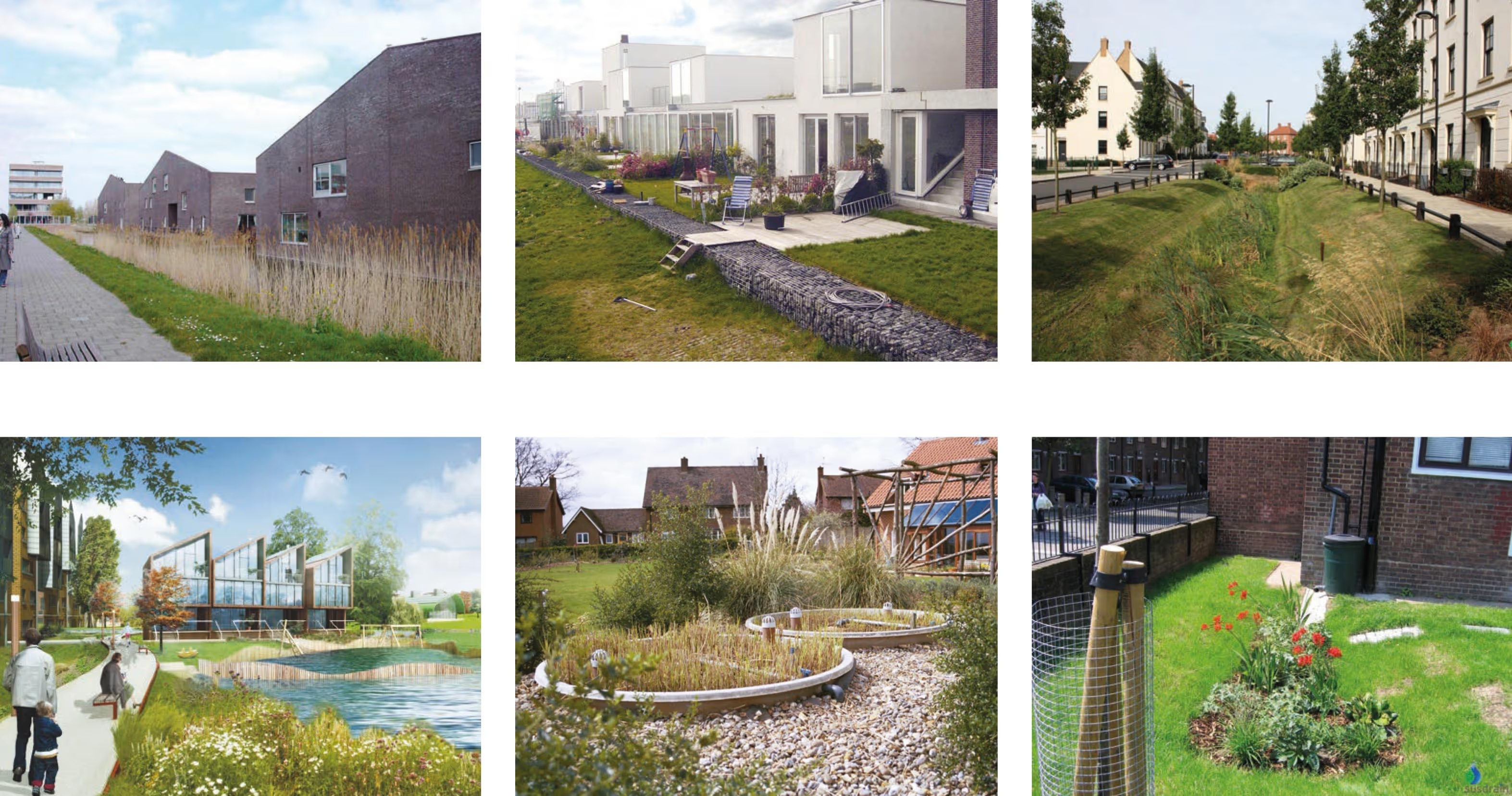
Since our scheme on the Isle of Man has gone public, we’ve received a few requests about the flood-resilient planning theory that informed the designs. Enclosed is an abstract of ‘The Blue Drempel’ or blue thresholds, which was first presented at the Architectural School in Warsaw, Poland, aspart of the international symposium on amphibious architecture. This thesis sought to explore how amphibious houses might work in larger numbers alongside other resilient archetypes, as part of a landscape-led masterplan that makes space for water.
Designs also include concept plans developed in collaboration with our friends at Waterstudio in the Netherlands.
Further publications include "Aquatecture: Buildings and Cities Designed to Live and Work with Water" by Robert Barker & Richard Coutts, RIBA Publishing.
Credits: Richard Coutts, Matthew Sharman-Hayles, and John Napier.
Since our scheme on the Isle of Man has gone public, we’ve received a few requests about the flood-resilient planning theory that informedthe designs.
Read More
We are pleased to report that BACA has been appointed to design a new marina building located on the tranquil River Stour in the heart of Christchurch.
Willow Way Marina is a family-owned and operated marina that has experienced business growth, especially since the pandemic, as boat owners favour staycations, and the existing workshops and sheds have reached capacity.
The new building will provide a showroom, chandlery, meeting spaces, and new staff welfare facilities.
We are pleased to report that BACA has been appointed to design a new marina building located on the tranquil River Stour in the heart of Christchurch.
Read More