
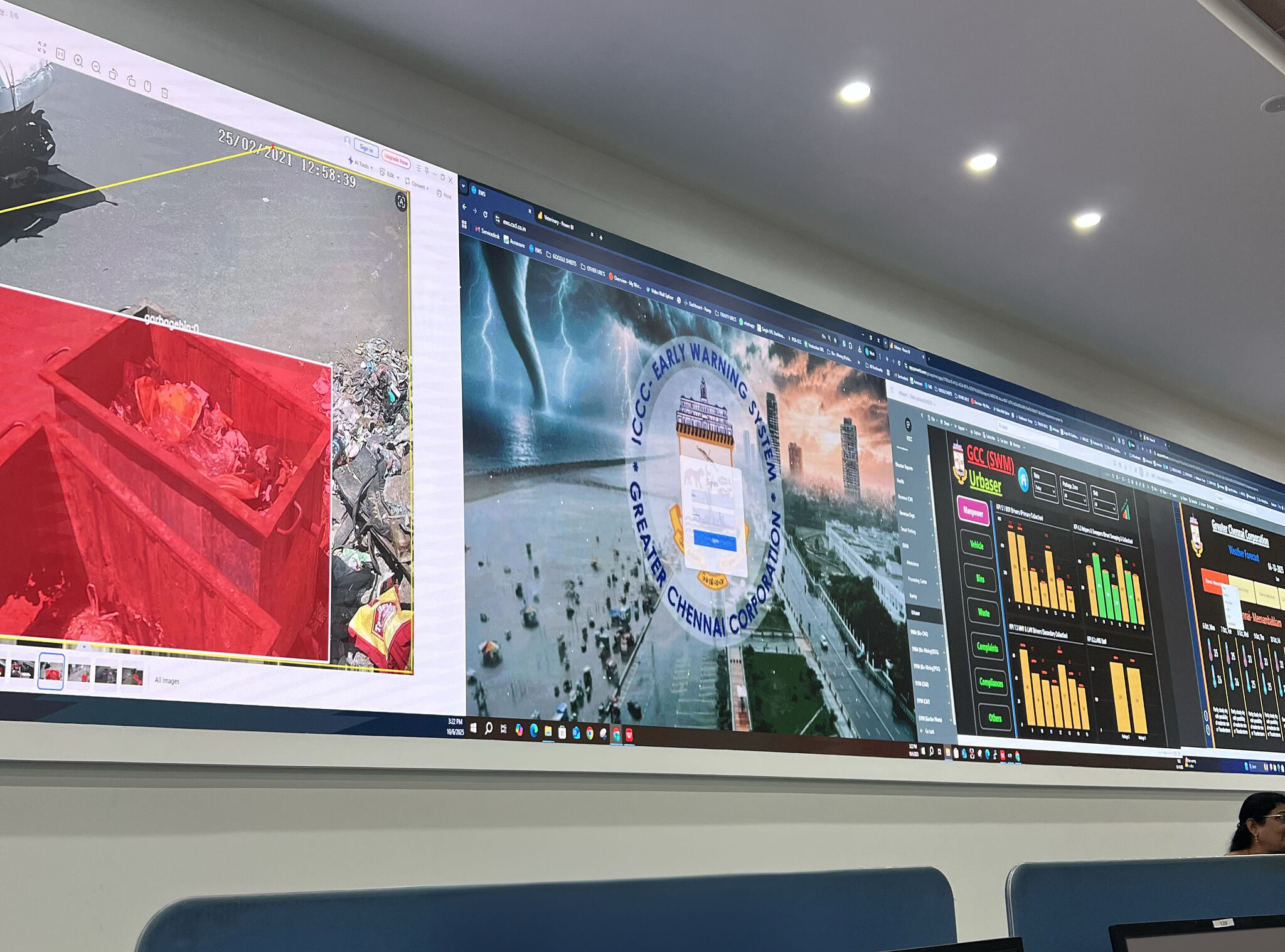
Foresight and memory are two of the core components of flood resilience. If we do not learn from the mistakes and errors of past disasters, we will repeat them.
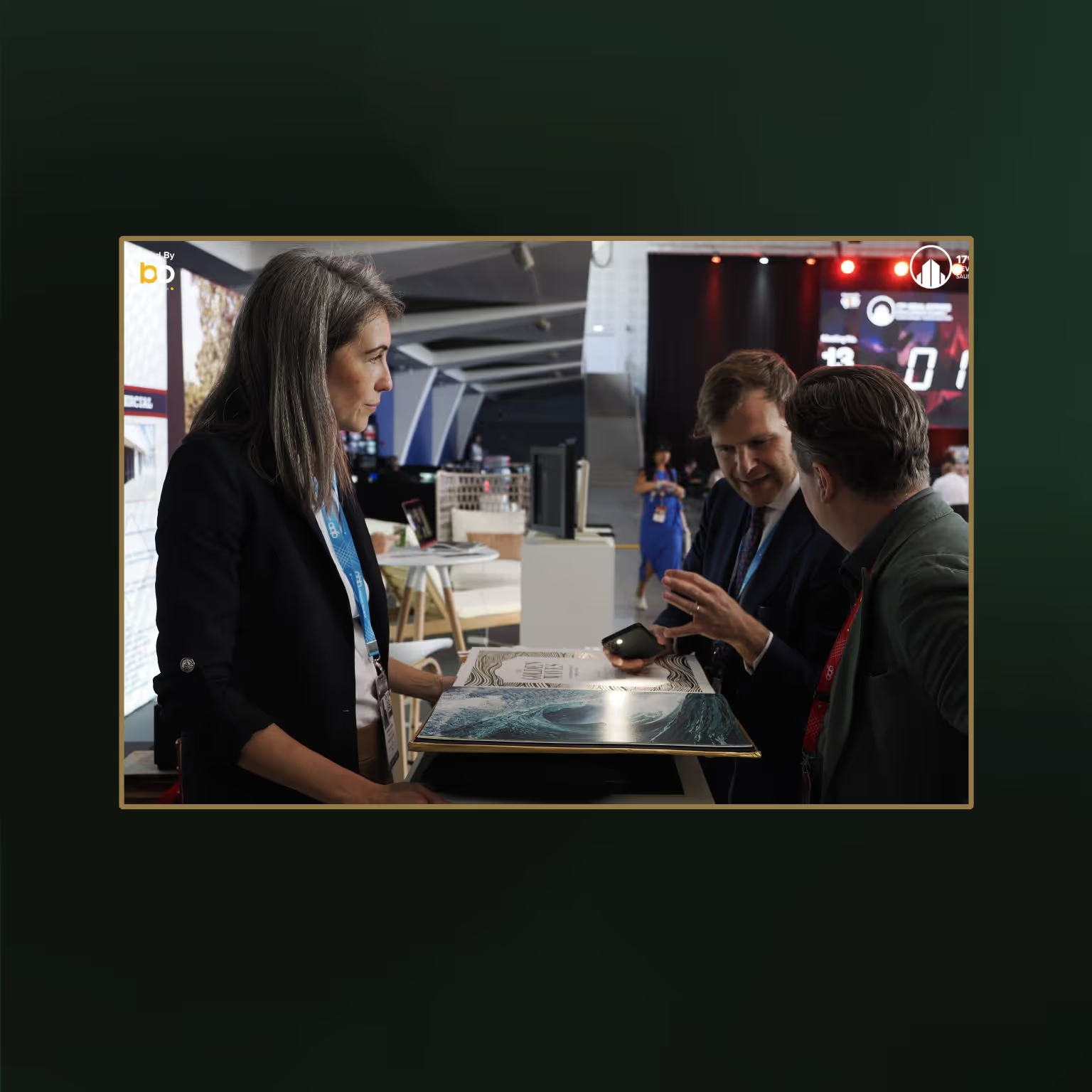
At GBB Venture Portugal, BACA’s director Richard Coutts had the honour of meeting Salvatore Giorgio Dino, who recognised the practice’s long-standing commitment to water-inspired architecture. Knowing that our projects are created on, in, near, or even under water, he introduced Richard to D’ORO’s latest masterpiece, The Golden Waves, a publication rooted in oceans, coasts, and the elegance of architectural storytelling.
D’ORO’s work is widely celebrated for its luxury architectural craftsmanship, seen in its hand-embossed copper covers and delicate lithographs produced for state institutions from the Vatican to the US and UK. The Golden Waves continues this tradition, capturing bodies of water with such purity that no filters or edits are ever applied. Once printed, the negatives are destroyed, ensuring that every image becomes as rare and irreplaceable as the most exclusive floating architecture projects.
Turning the pages is typically a gloved experience, reflecting the level of artistry present in these creations. Yet an exception was made for an architect whose world revolves around coastal architecture design, allowing Richard to feel the texture of the lithographs directly. Their layered surfaces, subtle but perceptible, mimic the softness of a still lake, a tactile reminder of nature’s quiet complexity.
This meeting resonated deeply with us, as our design philosophy is inseparable from water. Whether through water-inspired architecture or through personal artistic pursuits, the studio’s fascination with water continues to shape every project. Each brushstroke on canvas, each innovation in practice, becomes part of an ongoing conversation about the beauty, depth, and enduring significance of the world’s oceans and waterways.
At GBB Venture Portugal, BACA’s director Richard Coutts had the honour of meeting Salvatore Giorgio Dino, who recognised the practice’s long-standing commitment to water-inspired architecture.
Read More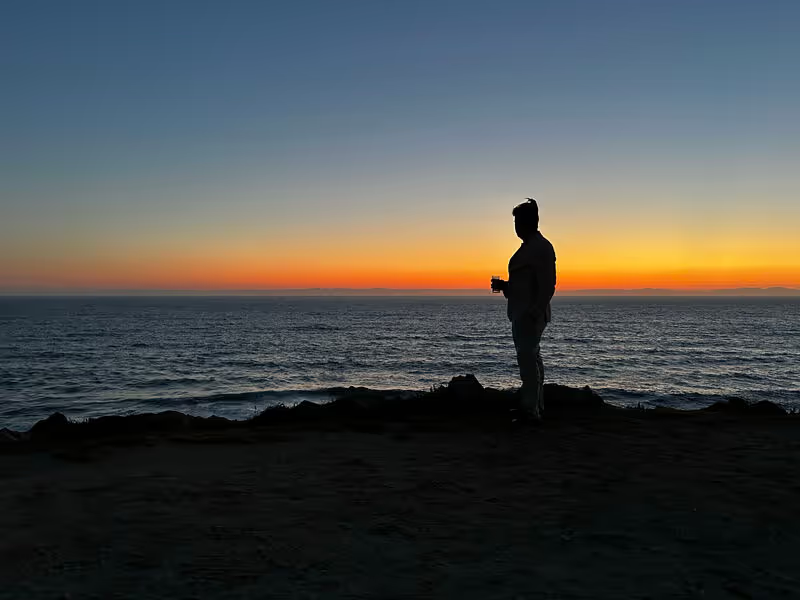
In an era where current groups of new team members appear to be quieter and more introspective than in previous years, face-to-face networking is arguably more important now than ever, not for just building skills, but for our own wellbeing:
In business, trust is everything. Even through bonding over shared interests outside of the world of work: children, painting, sports, spending time with your family etc. contributes to strengthening the foundation of trust.
Events like GBB Venture give everyone the chance to strengthen and display these skills in a social setting, surrounded by like-minded professionals (and plenty of good food!) and give the opportunity for directors and senior managers to converge and discuss the challenges of upkeeping their business and through sharing, realise their struggles aren’t acute to their business.
It was great to catch up with of UN Studio Yoo & Phillippe Starck colleagues, and great to meet new architectural friends - particularly Paolo Testolini of Woods Bagot. A fellow designer at NEOM with a passion for watercolour drawings. A new lifelong friend in the making. - Richard Coutts
Face-to-Face networking is arguably more important now than ever, not for just building skills, but for our own wellbeing...
Read More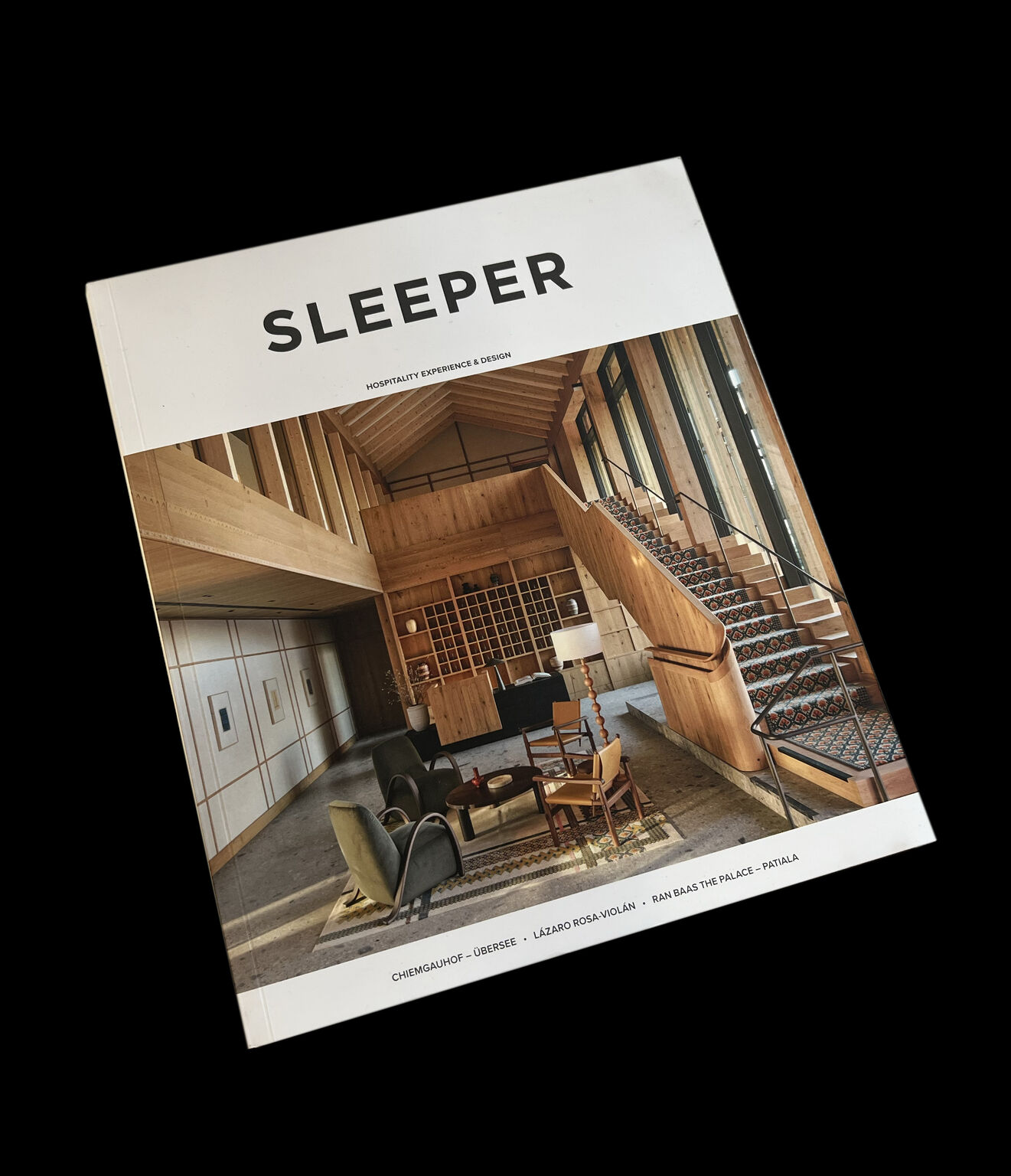
We’re incredibly proud to share a project that’s especially close to my heart: a new eco-resort in the Maldives, that features in this month’s iconic Sleeper Magazine. We’ve been working closely with AIMA Construction to bring this vision to life in Baa Atoll, just north of Malé. The resort will feature a mix of overwater villas and beachfront accommodation, along with five unique restaurants, a clubhouse, and a treetop spa made up of individual treatment pods.
One of the standout elements for me is the arrival pavilion. I envisioned it as a sculptural form, inspired by driftwood scattered along the shoreline, natural, weathered, and seamlessly integrated into the landscape. It sets the tone for what we want guests to feel: that they’re entering a space in harmony with its surroundings.
The overwater villas draw inspiration from the manta rays that glide through the waters of the region. Their distinctive shapes and fluid motion guided our design, with sweeping rooflines and curving façades that opens to expansive decks and private pools.On land, the treetop spa nestles high in the canopy. We designed it to immerse guests in nature, each spa pod is built around biophilic principles, while open-air relaxation spaces offer breathtaking views of the island’s lush interior.
Dining is an important part of the experience too. Each of the five restaurants will celebrate local culture, using regionally sourced materials and handcrafted furnishings to create spaces that feel rooted, welcoming, and real.
From the start, sustainability has been at the heart of everything we've done. We're deeply committed to protecting the fragile ecosystem of the Baa Atoll. To that end, the resort will run on floating solar panels and a biomass centre powered by coconut husks. We’re also using prefabricated and recycled materials throughout construction to reduce our environmental footprint as much as possible.
We’re incredibly proud to share a project that’s especially close to my heart: a new eco-resort in the Maldives, that features in this month’s iconic Sleeper Magazine.
Read More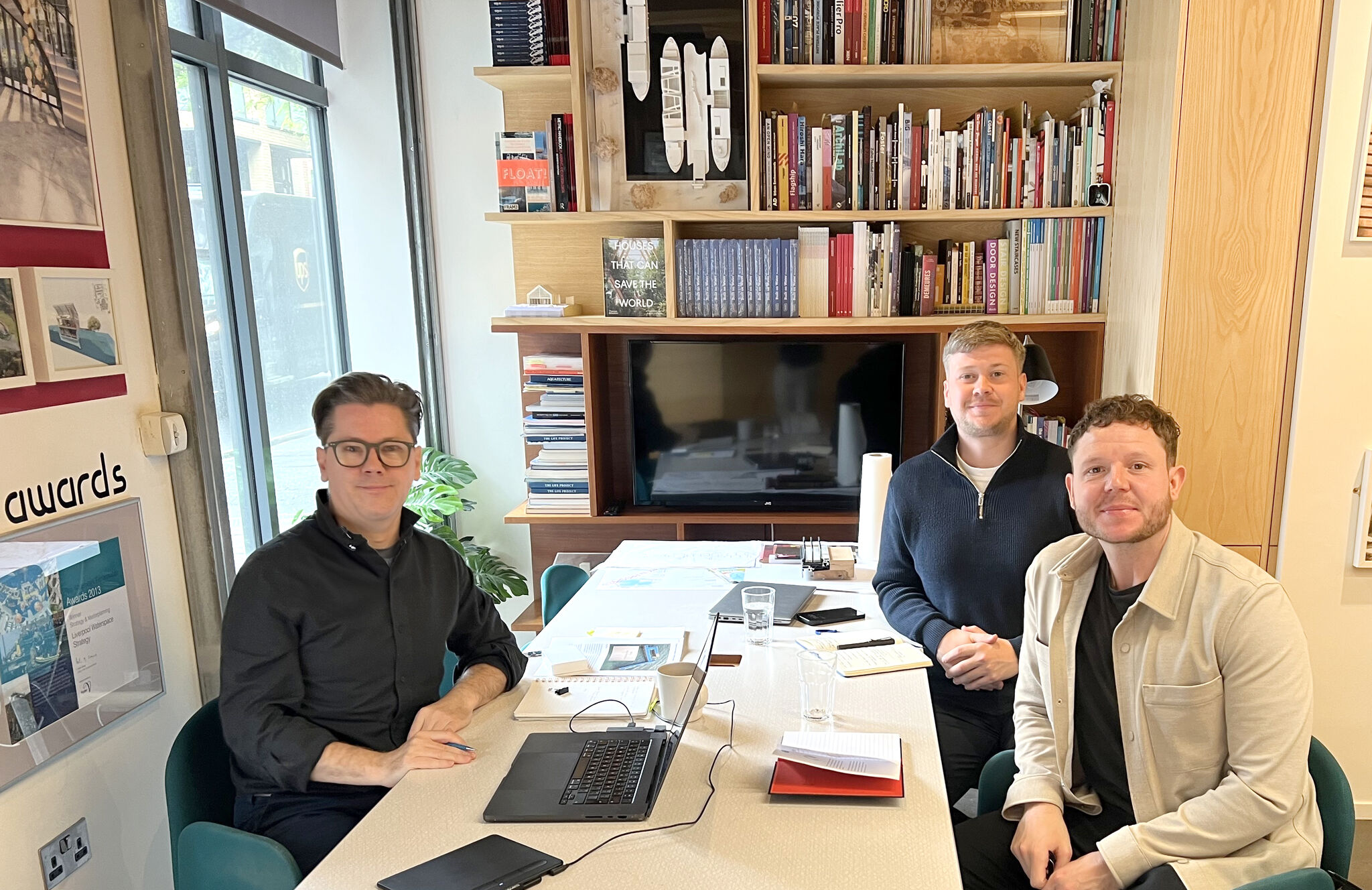
Great to catch up with RIBA’s Jack Irlam-Mowbray and Joe Ellis last week to share feedback on how Chartered Practices use RIBA services—and where there’s room to grow.
We suggested that Chartered membership could benefit from a more dynamic, co-working-style space within Portland Place. Imagine small, medium, and large practices bringing clients—current and future—into the iconic building for meetings in spaces tailored for flexibility and quick customisation. This would not only increase footfall at RIBA but also transform it from a museum-like setting into a vibrant, cross-disciplinary hub of activity.
We also proposed that RIBA amplify its presence on social media by inviting practices to showcase what they do—then link those stories to the “Find an Architect” page. It’s a simple but powerful way to boost public understanding of an architect’s value and help future clients connect with local talent.From our Part 3’s and newly qualified architects.· PEDR sheets are hard work to fill in,· Simplify the RIBA’s websiteThe RIBA also kindly shared information on forthcoming events and socials.
This page is regularly updated with upcoming RIBA events if you and the team wanted to attend more events/talks etc. We tend to highlight the major ones in our Member Update newsletter every Thursday but this is the full programme of activities.
RIBA London Summer Socials
There are two more London Summer Socials coming up soon that you and the whole team are welcome to attend. Free for members. A good opportunity to have a drink and connect with other London-based members. I’ve heard they’ve organised some interesting speakers this year. You can reserve tickets via the links below.https://lnkd.in/egBuKihThttps://lnkd.in/ehT3Xxkj
RIBA London region newsletter
There’s a monthly newsletter issued by the RIBA London region, updating members on their activities and promoting their local Chartered Practices etc. If you don’t receive this and want to, I can get your email address added to the mailing list.If you ever need anything from RIBA, don’t hesitate to contact me and I’ll be more than happy to assist.
Contact details for the RIBA membership team below:
It was great to catch up with RIBA’s Jack Irlam-Mowbray and Joe Ellis last week to share feedback on how Chartered Practices use RIBA services.
Read More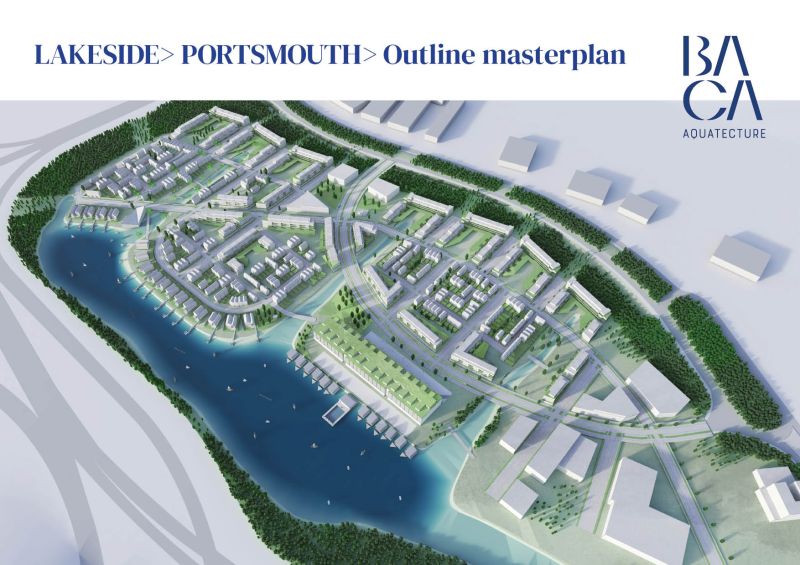
Following the driest spring since 1956, the Environment Agency urged UK water companies to strengthen supply protection plans. Both flooding and drought result from similar issues—dried, compacted soil can't absorb heavy rainfall, causing surface runoff. This underscores the need for rainwater attenuation in new and existing developments.
Our practice, commissioned by Portsmouth Council, applied the LifE (Long-term Initiatives for Flood Risk Environments) methodology, developed for Defra, to regenerate a 50-hectare estuarine brownfield site that once housed IBM’s headquarters. Located in Flood Zones 2 and 3 on the Portsmouth Peninsula, about 5 km from the city centre, the former business park now includes The Porsche Centre and Village Hotel Portsmouth.
BACA’s vision transforms Lakeside into a medium-density, sustainable, flood-resilient community of ~1,500 homes. It centres on repurposing Building 1000 as a landmark residential core, with penthouses and lakeside views. The adjacent lake becomes a community asset, enabling water-based leisure and hosting floating and static homes.
Housing types are assigned by flood risk:
• Floating homes in flood zone 3b (river course)
• Amphibious homes in flood zones 3a and 2
• Flood-resilient homes in zone 2
• Traditional, retrofittable homes in zone 1
This zoning reduces flood risk and aligns with urban planning best practices, incorporating active frontages, density goals, and public/private amenity access. Elevated primary roads ensure connectivity during storms.Green and blue infrastructure defines the masterplan. Three “swale corridors” flow from the lake, splitting the site into four zones—business, residential (Building 1000), and two mixed-use quarters. These swales serve as SuDS, landscaped parks, and flood channels. Positioned near the water, they manage runoff and direct it to flood storage zones, creating vibrant green spaces that support recreation and biodiversity.
By centralising these swale parks, the plan maximizes usable land and improves wayfinding. Water is embraced as a feature, not a threat, enabling natural flood attenuation and resilience to both flood and drought.Minimal hard infrastructure maintains site permeability. Low-carbon homes cluster around shared green areas designed for water management. Walkability and sustainability are key, with EV charging, cycle lanes, and a local shuttle service.
The Lakeside masterplan exemplifies climate adaptation, merging placemaking with flood mitigation to create a liveable, water-conscious neighbourhood functional in drought and flood alike.
Following the driest spring since 1956, the Environment Agency urged UK water companies to strengthen supply protection plans.
Read More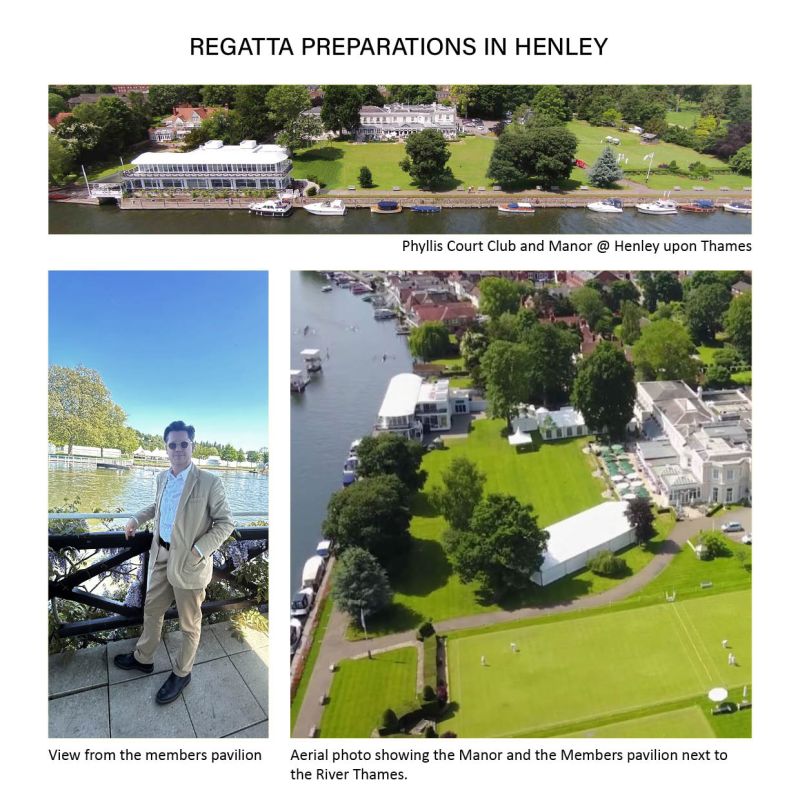
You can’t get much closer to the water than Phyllis Court Club, one of England’s oldest private members’ clubs, set right on the banks of the Thames in Henley.
We were honoured to tour this historic venue and discuss exciting plans for its future. More to come soon.
Phyllis Court holds a prestigious spot in the heart of Henley Royal Regatta history. Founded in 1906 by Roy Finlay to elevate the regatta experience, it quickly became a social epicentre, drawing high society to its elegant Georgian clubhouse and sweeping riverside lawns.
The sun was shining, the croquet lawns were alive with international competition, and the spirit of tradition was as strong as ever.
You can’t get much closer to the water than Phyllis Court Club, one of England’s oldest private members’ clubs, set right on the banks of the Thames in Henley.
Read More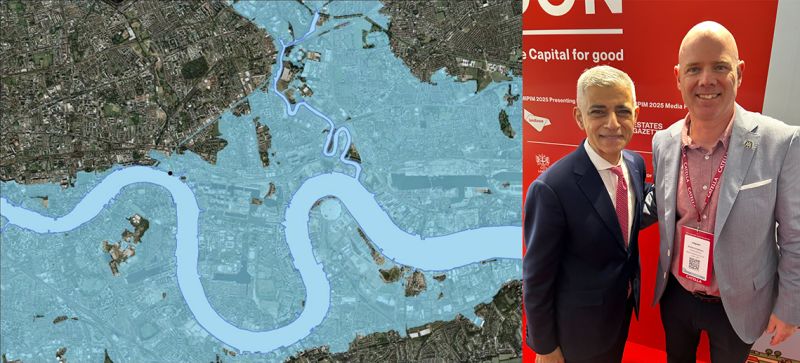
The Environment Agency (EA) released updated flood risk assessments in December 2024, incorporating enhanced data and modelling techniques to reflect the impacts of climate change.
Detailed and more precise flood-risk maps incorporating the latest UK Climate Projections and based on updated high-resolution terrain information of 2m or finer resolution, are now available to the public. These assessments indicate that 6.3 million properties in England are currently at risk of flooding, a number projected to rise to 8 million by 2050. (Source: Financial Times).
On a positive note, The Environment Agency's new maps will help unlock potential development sites in the UK by providing clearer, more precise flood risk data. By updating outdated flood zone classifications and incorporating the latest climate modelling, these maps will allow developers to identify areas suitable for construction with greater confidence. Previously, some sites were incorrectly categorised as high-risk due to broad flood assessments, limiting development opportunities. The improved maps will refine these designations, potentially reclassifying some locations as viable for housing and commercial projects. This can streamline planning approvals and reduce costly flood mitigation requirements. Additionally, local authorities and developers will have better insights into sustainable drainage solutions and climate resilience measures, ensuring safer, more environmentally sound developments. By offering a more accurate understanding of flood risks, the new maps will support the UK’s housing and infrastructure goals while balancing environmental protection and economic growth.
In April, Richard will be discussing with City Hall how we can use BACA’s Planning principles, developed for DEFRA, to unlock these sites to help deliver much needed housing in Greater London.
Detailed and more precise flood-risk maps incorporating the latest UK Climate Projections and based on updated high-resolution terrain information of 2m or finer resolution, are now available to the public.
Read More
We are honored to have been featured on Malcolm Reading Consultants' (MRC) architectural radar and selected as one of five international firms invited to submit designs for an exciting new project outside the UK. While details are under wraps, we can say water will play a role—though it won't be the main focus this time!
Our inclusion as one of MRC's rising stars is a testament to our recent work, including the new museum in Yanbu, KSA, the public sports center in Aldershot, and the floating Water Lily project in Norfolk.
MRC has a history of organizing prestigious competitions, such as the recent Dallas Museum of Art, which saw 154 global submissions and culminated in a shortlist featuring top firms like David Chipperfield Architects (UK) and Diller Scofidio + Renfro (US). The competition was ultimately won by Nieto Sobejano Arquitectos (ES).
Other notable MRC competitions include the Adelaide Contemporary Museum in Australia, won by Diller Scofidio + Renfro (US), the Museum of London, won by Asif Khan, and the UK Pavilion for Shanghai, won by Thomas Heatherwick.
We are honored to have been featured on Malcolm Reading Consultants' (MRC) architectural radar and selected as one of five international firms invited to submit designs for an exciting new project outside the UK.
Read More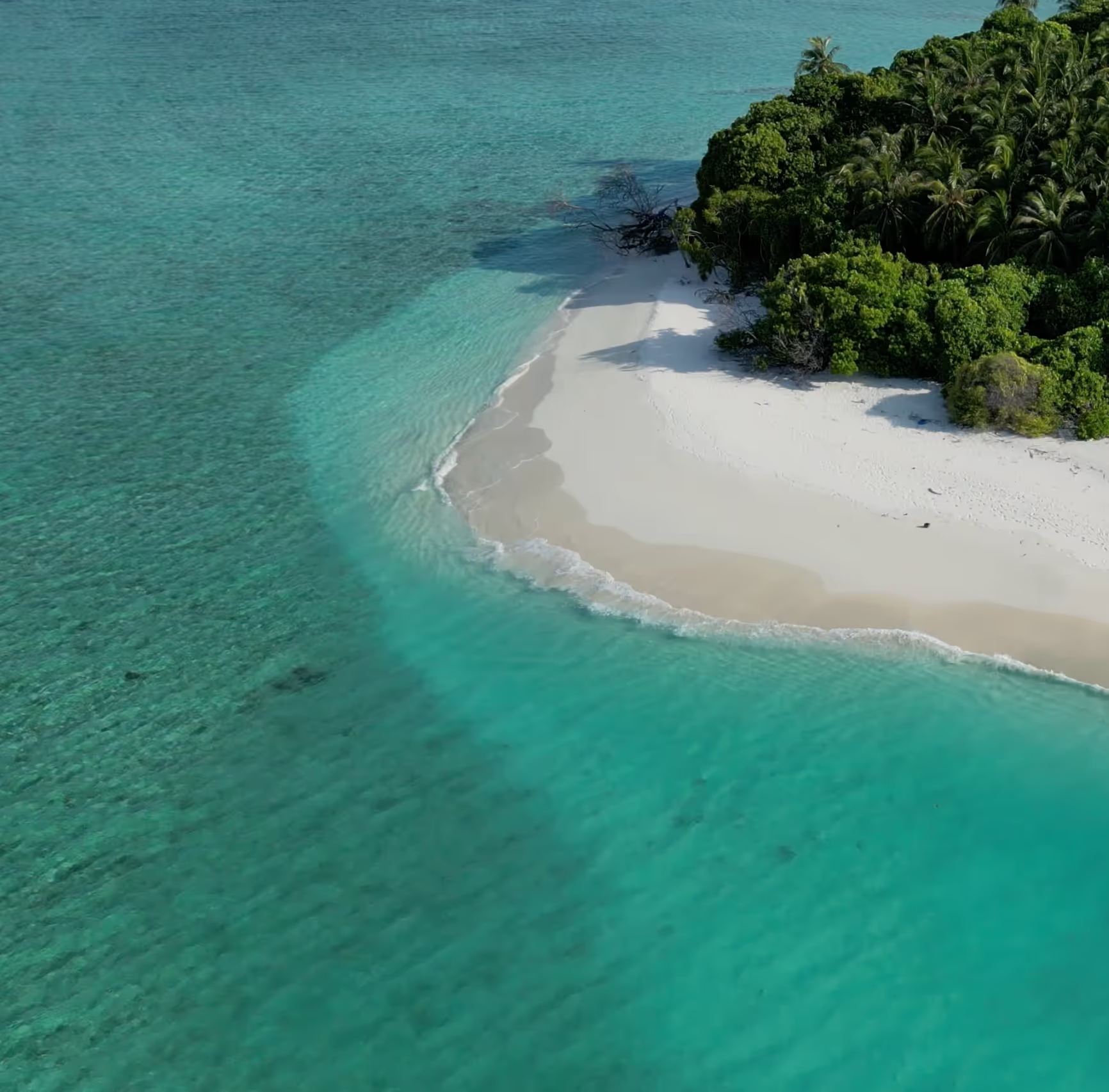
Probably one of the most exquisite site visits one could be invited to, the BACA Team travel to the Maldives to experience firsthand the marvels of this archipelagic state.
Read More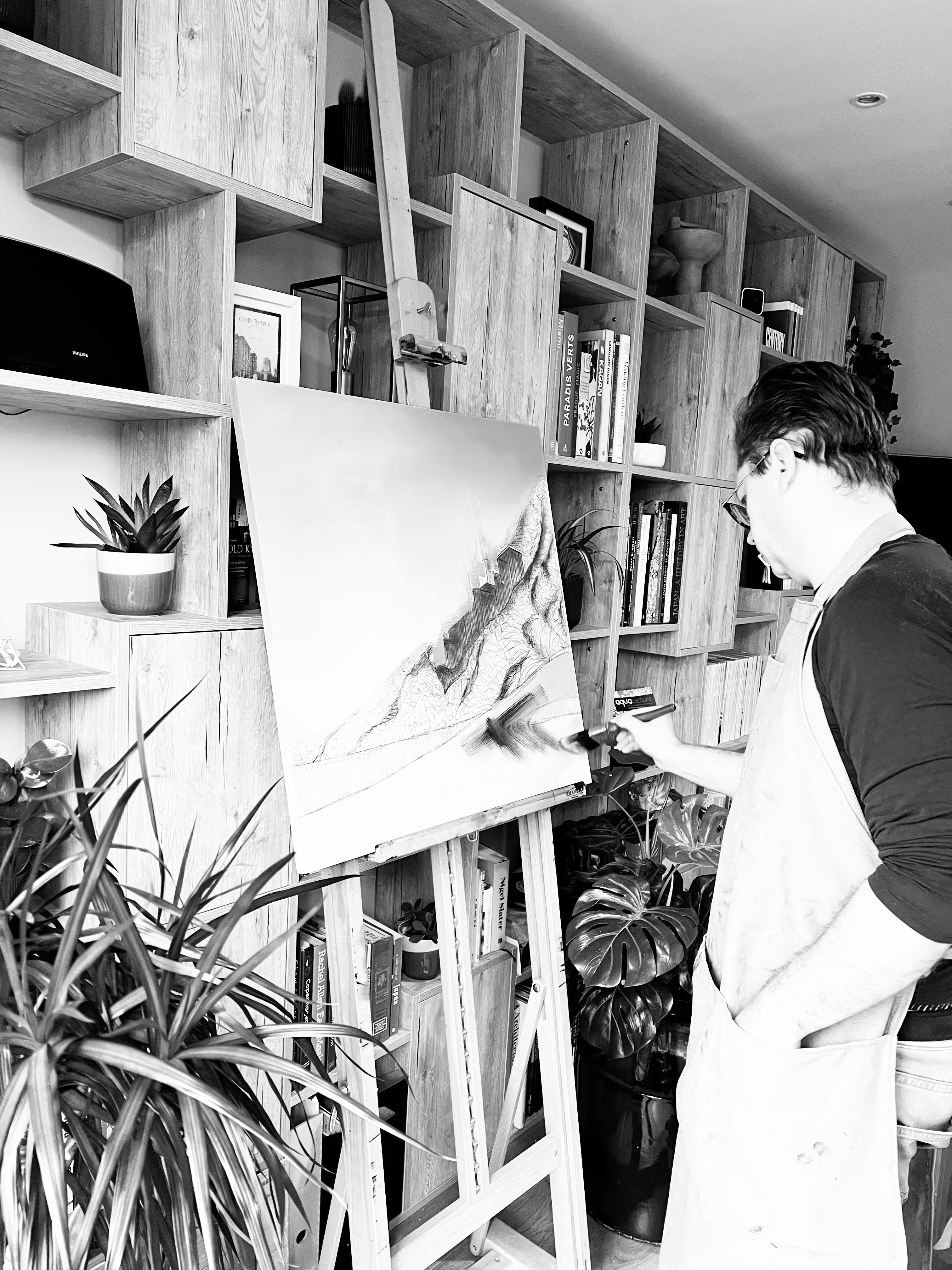
Embracing the tactile joy of creation far removed from the digital realm, he begins with charcoal, sketching the embryonic outlines of what will soon blossom into a vivid landscape. The sky and mountains, first imagined in shades of gray, gradually receive their depth, layer by layer.
For Coutts, this process is not just about applying colour to canvas; it's an intimate exploration of shadow play, a meticulous examination of the landscape before him, and a deep, sensory connection to the place he's bringing to life.
This artistic journey is crucial for Coutts, as it informs his architectural vision, guiding him toward understanding what type of architecture would seamlessly blend with, and enhance, the natural beauty of this unique environment.
Through his craft, Coutts celebrates the essence of making, marrying the worlds of art and architecture in each stroke and shade.
In the calm sanctum of his home studio, practice director Richard Coutts delves into the foundational stages of his latest painting.
Read More-min.avif)
Fusing tradition and modern methods of construction, the Misty River House is a pre-existing residence situated in Henley upon Thames. The homeowners engaged BACA architects to replace the current substandard dwelling with a meticulously designed amphibious house. This initiative aims to enhance the visual appeal of the riverfront while concurrently mitigating flood risk for its residents. The house is not located within a conservation area but is located within the local Greenbelt.
The replacement dwelling will be amphibious. An Amphibious House is a building that sits on the ground, within a ‘dock’, and is designed to rise from its ‘dock’ on the rare occasion when an extreme flood occurs. This form of construction will help reduce the risk of the existing property and to the surrounding properties by providing additional flood storage under the building. This type of property has the benefit of improving the relationship of the building to the ground plain by providing fewer steps up to the building and eliminating the redundant void below the existing ground floor; that would occur if the replacement dwelling were to be stilted.
It also provides an adaptable response to climate changes as the building will always float above the highest flood levels. BACA architects built the UK’s first amphibious house in Marlow, Buckinghamshire almost a decade ago and the building is acknowledged nationally and internationally as an exemplar of flood mitigation design, especially in riverside locations.
Hydroscapes: A meticulously planned garden by Richard Miers Garden Design (named ‘People’s Choice’ award winner at the Chelsea Flower Show 2022) serves as a natural flood alert mechanism. Terraces arranged at varying heights are strategically constructed to flood gradually, notifying residents well in advance of any imminent threat from rising floodwaters. At BACA architects, we refer to this concept as ‘an intuitive landscape’. The bottom terrace features a lawn and wild flower meadow, the next one includes shrubs and plants, while the seating deck is situated one level above. The highest terrace, positioned just below the living room, acts as the peak point. This tiered arrangement aids in swift recovery by offering dry zones as water levels recede, and the plants play a role in minimizing the erosion of the embankment.
The landscape will deliver a 10% ecological gain on the site.
Construction: The replacement dwelling would be constructed from high quality materials. The building deploys an oak timber frame building combined with lime-rendered structurally insulated panels. This combines the best of low energy design and traditional craftsmanship with modern methods of construction.
The building will be low energy construction and seeks to achieve low carbon construction in its build. The proposal has adopted energy hierarchy - to be lean, clean, and green; and archiving a significant reduction in Carbon emissions over current Part L Building regulations. The whole life carbon assessment demonstrated that the embodied carbon of the project will be less than refurbishing the existing building after every flood event throughout the building 75-year lifespan.
Conclusion: The replacement dwelling will improve the riverfront frontage and create an attractive addition to the housing stock along this stretch of the river in Henley upon Thames. Considering that this is a replacement dwelling in flood zone 3, the proposed building will deliver a low carbon solution, high quality, beautiful, architectural design sympathetic to its setting and will protect the residents from flooding deep into the 21st Century.
BACA share potential designs for new amphibious house.
Read More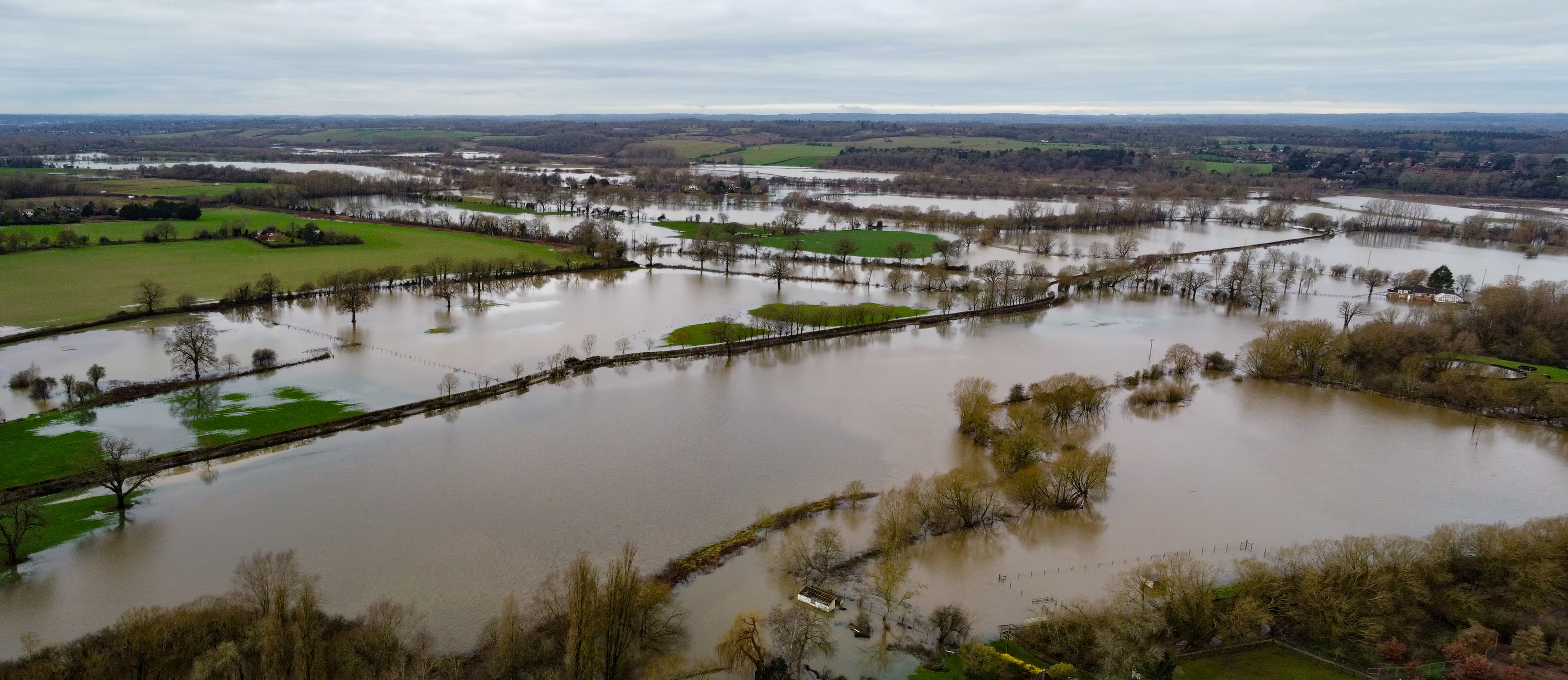
In the BBC Radio excerpt below (2hr 18mins in), BACA Director Richard Coutts briefly discussed the current challenges of the planning system. How can we, as planners, strike a balance between providing homes that are needed while ensuring they do not worsen flood risk? At an architectural scale, what solutions are available?
The proceeding audio picks up on the fire service's response, plus the disruption and terrible damage caused to homeowners.
Over the next few weeks, we plan to post some 'What if?' mini-articles with our good friend and academic, Ripin Kalra.
These articles will contain some bolder ideas for flood mitigation. Also, feel free to send us any solutions that you have come across outside the UK, and we'll endeavour to share them with as broad an audience as possible.
The aftermath of Storm Henk continues. Leicestershire and Nottingham declare major flooding incidents.
Read More
Our flood-resilient research and hospitality architecture are taking us to Bangladesh. The site is located within the ‘Chars’, adjacent to the River Meghna – an area where the translation means ‘land that appears and disappears’. Because of these traits, this transient environment lends itself to adaptable architecture. The site will provide 100 lodges and a clubhouse.
Read More
BACA will be attending the fourth International Conference on Amphibious and Floating Architecture, Design and Engineering at the Institute for Floating Buildings (IfSB e.V.) and Brandenburg University of Technology (BTU) in Cottbus, Germany this week.
Professor Edmund Penning-Rowsell OBE, will open proceedings with his talk titled: 'Don’t sterilise our floodplains: Use them creatively'. Edmund has over 40 years’ experience of research and teaching in the flood hazard field, analysing floods and investment in flood alleviation, river management, water planning and landscape assessment. He is full professor at Middlesex University, UK and founder of Flood Hazard Research Centre (FHRC), as a specialist Centre where they focus on the socio-economic and policy dimensions of floods. This Centre must be one of the oldest of its type in the world. He is also a Distinguished Research Associate at Oxford University Centre for the Environment. Edmund’s talk will feature some of BACA’s built work: The UK's first amphibious house and Nijmegen, a £300m flood relief / river realignment scheme in Holland.
Robert Newman, Senior Architect, will present BACA’s latest amphibious designs in a talk titled “When looking at amphibious projects, is resilience about the longevity of the building or longevity of the planet, or both?”
BACA will be attending the fourth International Conference on Amphibious and Floating Architecture, Design and Engineering at the Institute for Floating Buildings.
Read More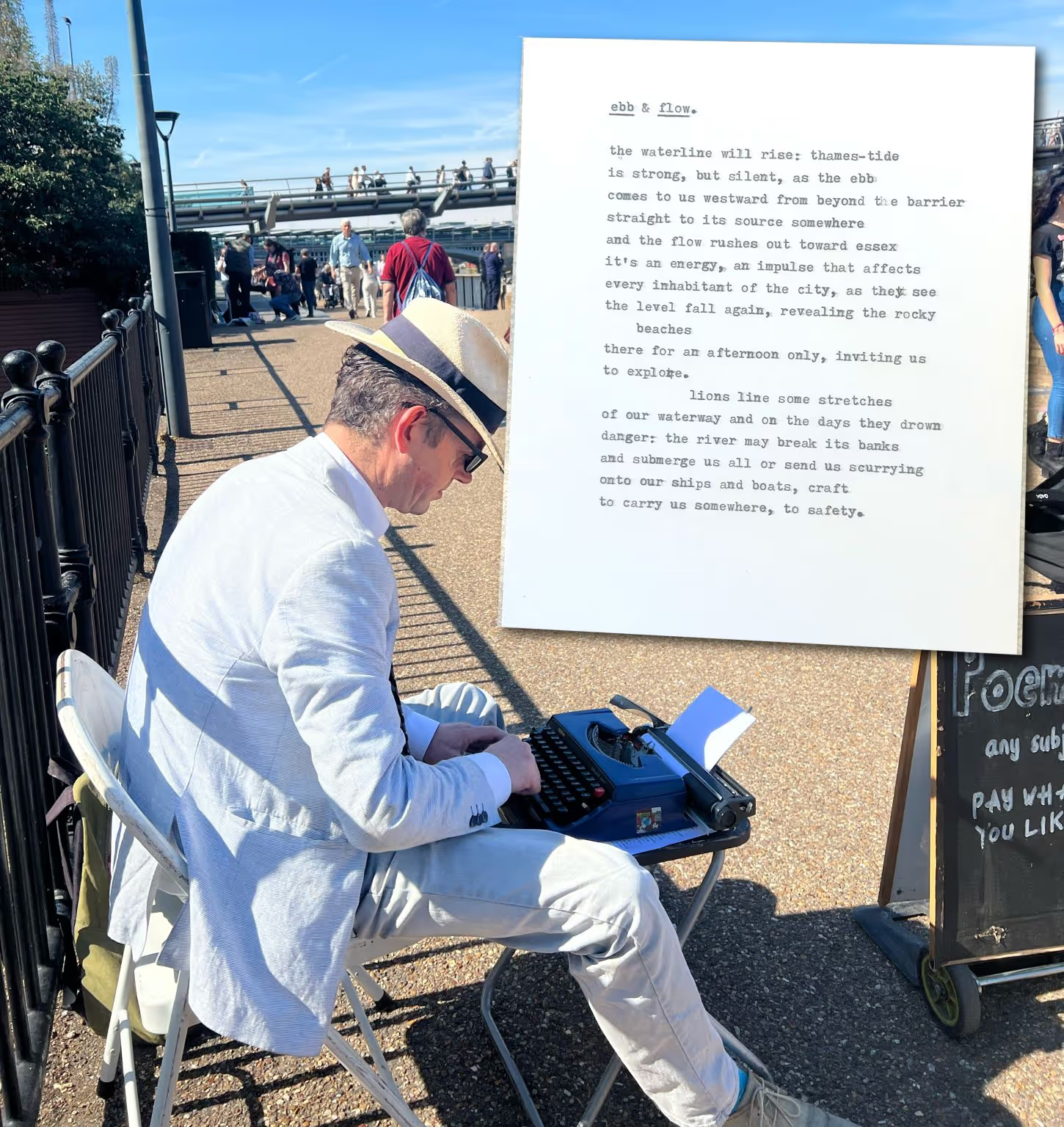
In a moment of whimsy, Richard Coutts, found himself captivated by the allure of the Thames.
Read More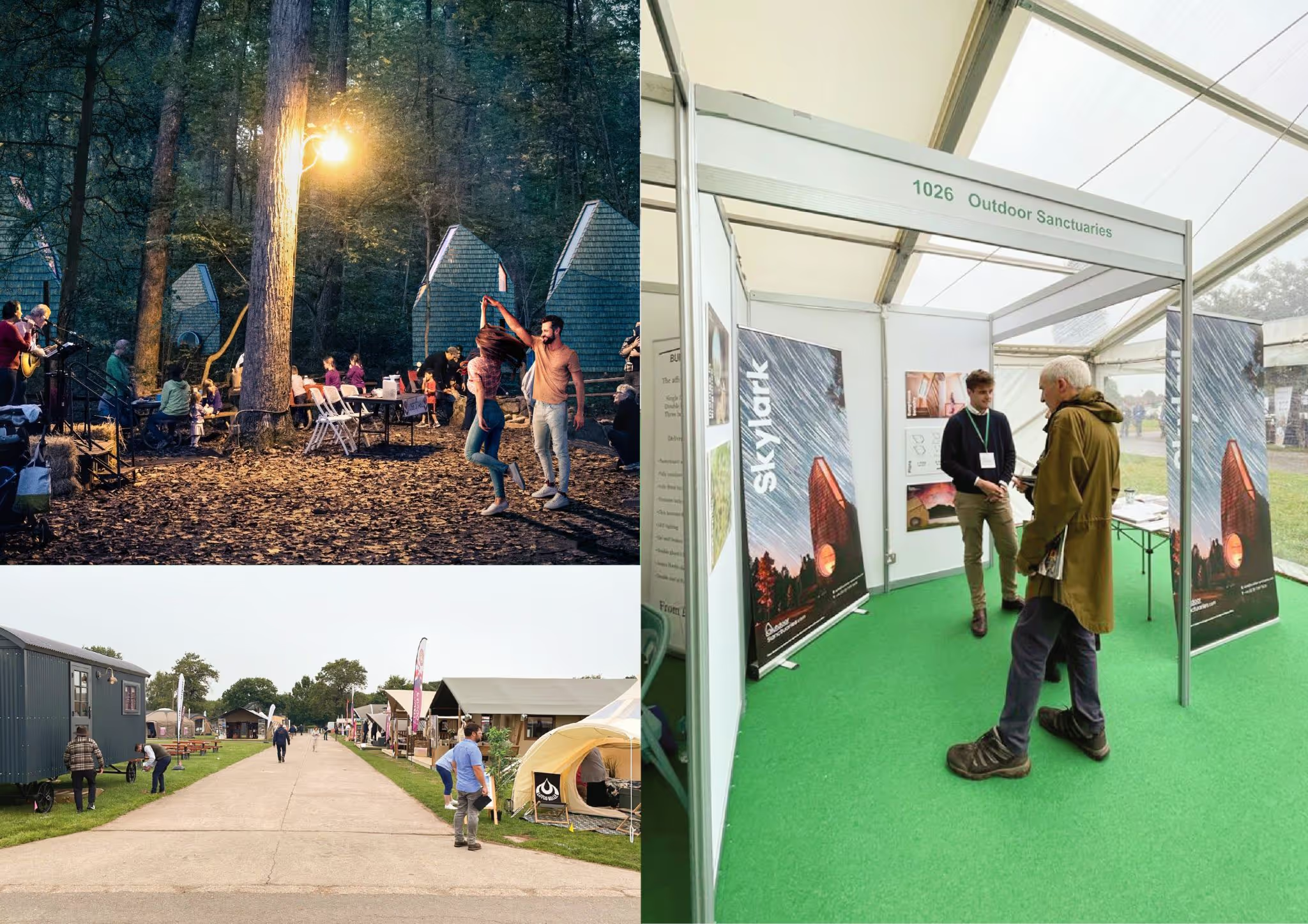
BACA's spinoff company, Outdoor Sanctuaries, will be showcasing our designs for the Skylark, an eco-friendly luxury glamping experience at the Glamping Show today, tomorrow, and Saturday!
If you're passionate about innovative outdoor experiences, sustainability, and luxury camping, make sure to visit our stand 1026 at the Glamping Show. Our team is on hand to showcase our latest creations and share insights into how we're redefining outdoor hospitality.
Event Details:
The Glamping Show, NAEC Stoneleigh, CV8 2LH
Today, Tomorrow & Saturday
9:30 AM - 5:30 PM
Come explore our unique glamping solutions, designed to bring you closer to nature without compromising on comfort. Learn about our commitment to eco-friendly practices and discover the perfect blend of adventure and relaxation that Outdoor Sanctuaries offers.
BACA's spinoff company, Outdoor Sanctuaries, will be showcasing our designs for the Skylark, an eco-friendly luxury glamping experience at the Glamping Show today, tomorrow, and Saturday!
Read More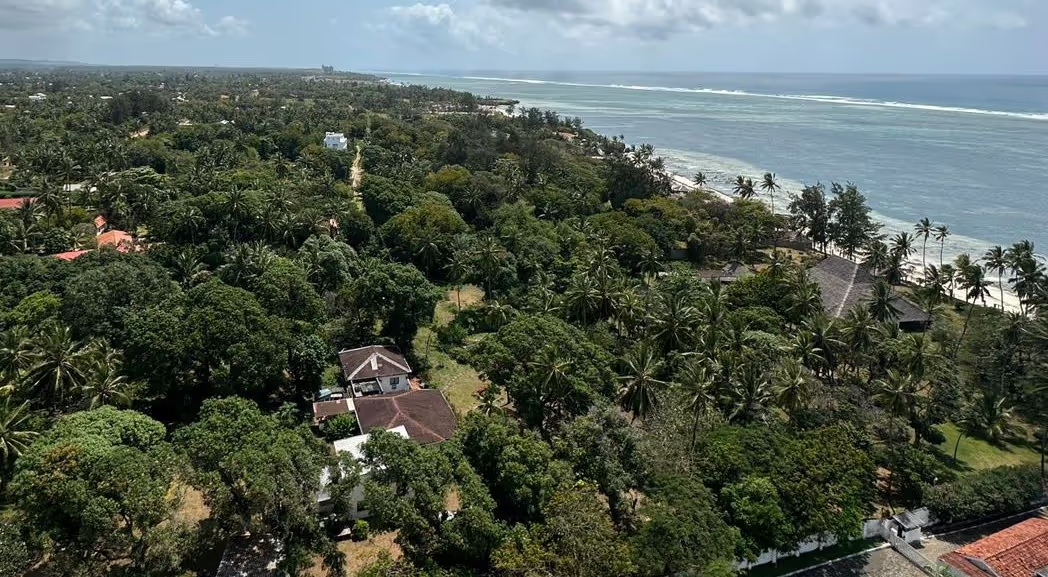
Mombasa, a coastal gem on the shores of the Indian Ocean, offers a captivating blend of history, culture, and natural beauty.
Today's picture is from the team's site visit to Mombasa from our accommodation.
The brief is for a Wellness and Detox Retreat as part of a boutique hotel. The 4-star resort will offer a much-needed break from our technological lives, providing an off-grid stay, locally grown food, and uninterrupted ocean views.
The team will be visiting the city and other hotels locally. The aim is to explore different local construction techniques and delve further into materials.
Site Visit to Mombasa.
Read More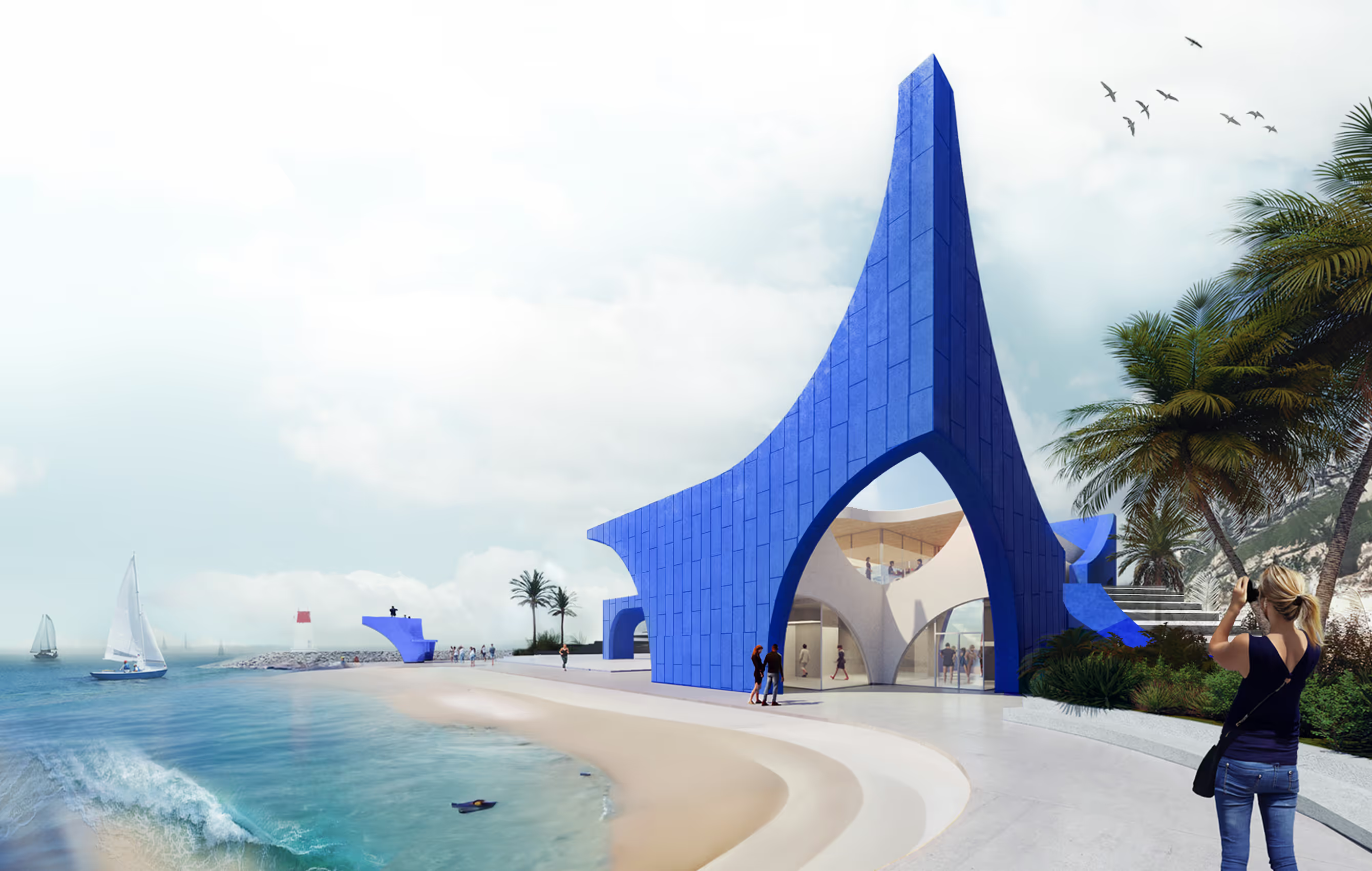
For the Monaco Smart Marinas, we opened our pitch by discussing the beauty and efficiency of sailing, tapping into the setting of the event hosted at Monaco’s Royal Yacht Club.
At its simplest, a piece of canvas can stretch using a simple mast and rigging. This canvas then becomes a sail, and this sail can propel a simple vessel across an ocean. It is efficient, clean, sustainable, and the journey is exhilarating. It does not require a huge spend, but the effect is substantial. So, for the competition, we decided to go for a refurbishment over a new build. We asked our team: ‘Can we preserve the building and instead of spending circa £25m on a new building – could we enhance its purpose and yet give it a radically different feel with a budget closer to £2.5 million? And could the design be fun and memorable?’
PRESERVE, REPURPOSE, REUSE
The repurposing of the existing concrete structure into our boat club represents a harmonious fusion of sustainability and innovation. The existing building is orthogonal and utilitarian. Much is good and functional and can be repurposed. Our approach has been to open the corner and provide clarity and legibility to the entrance and reception area. Changing rooms and dry-stack are to be refurbished and upgraded. A new café is to be added, a lightweight structure to the existing roof.
The most striking feature is the new ultra-marine blue façade that stands proud of the existing structure - Echoes of French Artist Yves Klein’s blue-sky work. The sculptural form signals the location entrance and organizes the activities that sit behind. From the ocean or the land, the building acts as a lighthouse, port, and sanctuary.
For the Monaco Smart Marinas, we opened our pitch by discussing the beauty and efficiency of sailing, tapping into the setting of the event hosted at Monaco’s Royal Yacht Club.
Read More