
We are a practice-based research company. We collaborate with academics, engineers and politicians to advance our understanding and affect change in the field of architecture and the built environment, across three core areas: enable, design and build flood-resilient homes and communities.
In the last 20 years, the ten worst international flood events alone claimed over 50,000 lives, affected one billion people and resulted in damages in excess of $165 billion.
Storm events both worldwide and in the UK are occurring with greater intensity and frequency over the past decade. The failing of recently constructed flood defences, such as those in Cumbria, have exposed a growing uncertainty in weather patterns and a weakness in relying on traditional flood defences alone.
In 2009 we published the LifE ‘Long-term Initiatives for Flood-risk Environments’ Project for Defra, marking a fundamental shift from traditional flood prevention towards a non-defensive approach based on ‘Making Space for Water’, as well as the highest environmental design standards, including reducing operational energy, embodied carbon and potable water.
Space is made to store water, and for water to flow through predetermined parts of settlements without significant disruption to people’s lives. The space between buildings, which is designed to flood, can provide other functions, such as recreation or energy generation when not flooded, creating multi-functional space and integrated planning. Where housing could not be located within areas of least vulnerability, we developed new building typologies and mitigation measures.
Six principles guide every project, from the first site visit to the finished building.

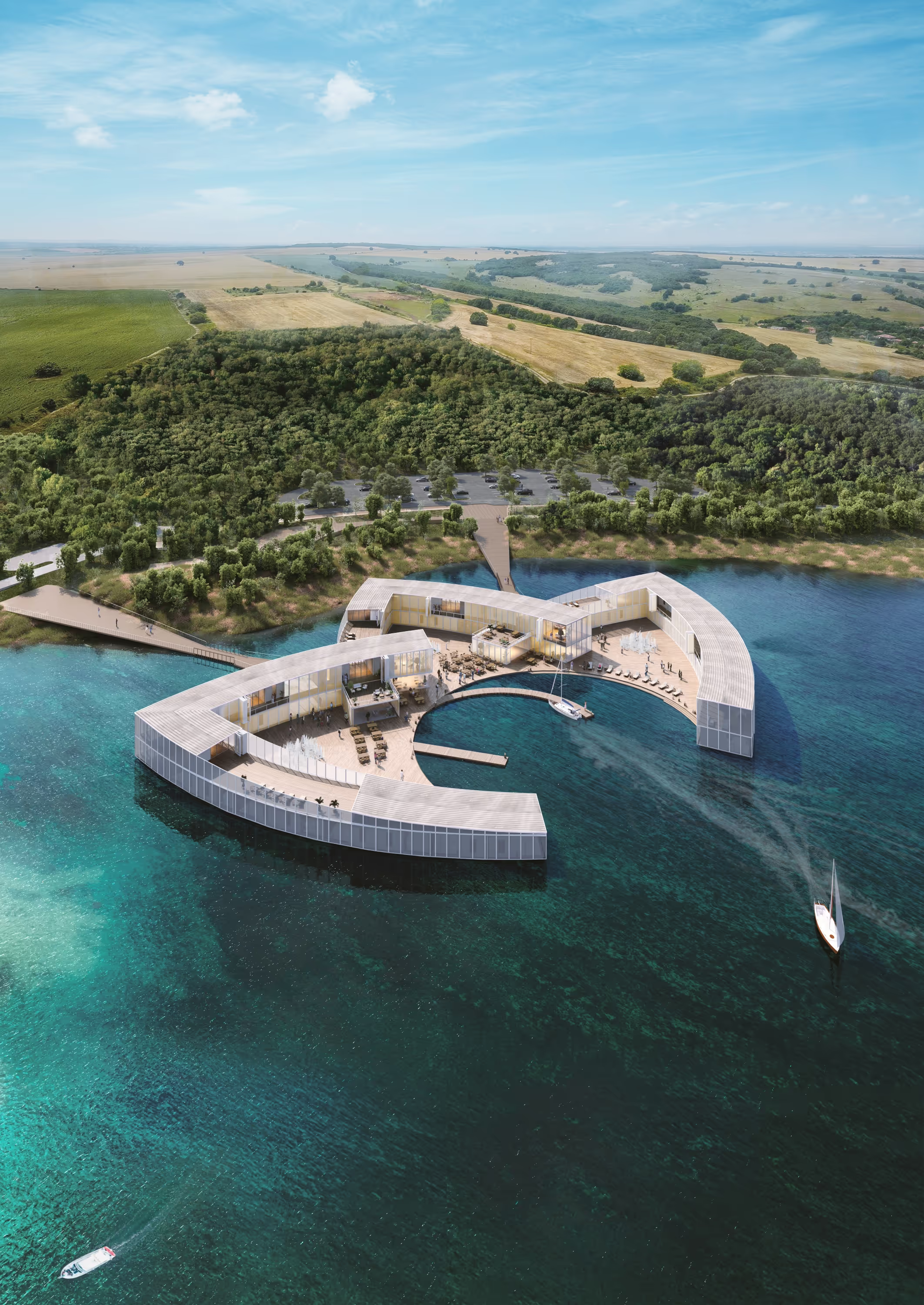
Our first consideration is how a project harmonises with its site and surroundings. This encompasses understanding the relationship between the proposed design and the local environment, as well as contractual obligations.

In close collaboration with our clients, we assess the financial viability of a project, determining the number of units and the commercial space needed. Building on this, we create a comprehensive brief covering the distribution of key elements, circulation, public and private spaces, retail and F&B zones, and parking.

We delve into understanding who the prospective inhabitants are, what facilities and spatial arrangements will draw them to the development, why they would choose to stay, and how the project will contribute to the city’s skyline or waterfront, enhancing local culture and community life.

Our designs are informed by the availability of local materials, the supply chain, and regional construction expertise. We aim to anticipate and address local challenges proactively, ensuring that technical constraints do not compromise the design’s integrity.

We strategise the development’s massing to optimise solar gain control and wind capture for natural cooling. Our ‘fabric-first’ approach uses the building’s façade to moderate the climate, minimise energy consumption and enhance occupant comfort.

The culmination of our design philosophy is clear, coherent and beautiful architecture. With over 15 years of experience, we transform constraints into world-class designs through a robust philosophy understood by all stakeholders, adaptable to planning and budget while preserving distinctive architectural qualities.
The LifE Project (Long-term Initiatives for Flood-risk Environments) was developed by BACA architects as part of Defra’s Making Space for Water programme. LifE is our holistic urban systems approach that integrates water-sensitive planning, adaptive infrastructure and zero-carbon development, channelling nature-based solutions to create resilient places that work with water, not against it.
The LifE approach provides a clear framework to unlock difficult flood-risk sites for safe development. It received the RIBA President’s Medal for Practice-Based Research, the RIBA Sustainable Living by Design Award and a Bronze Medal at the International Landscape Awards.
View the LifE Project →